
Review the current excavator weighing system
Use the current product record to review the touchscreen indicator, angle-sensor, hydraulic-pressure-sensor, printer and installation-accessory description.
Open product pageWhat an excavator weighing project needs to define
An excavator weighing system estimates and records material during a defined dig, lift and loading cycle. FMSCales reviews the excavator, boom and arm configuration, attachment, hydraulic and position inputs, operator motion, material and required job records before confirming the system scope.
Excavator dealers, weighing distributors and quarry operators can compare excavator scales and mining excavator weighing systems for bucket-loading projects. Match the sensors, attachment, operating cycle and required records to the machine.
The system is reviewed for the identified excavator, attachment and operating cycle. This page does not promise one configuration, result or acceptance route for every machine.
Excavator Weighing Systems: Open a product page for model-specific specifications, images and configuration details.
Use the current product record to review the touchscreen indicator, angle-sensor, hydraulic-pressure-sensor, printer and installation-accessory description.
Open product pageDefine the machine and attachment baseline, measurement cycle, reference method, acceptance matrix, exception tests and handover evidence before award.
Open product pageKeep excavator bucket geometry and motion separate from wheel-loader hydraulic and lift-cycle requirements when comparing onboard systems.
Open product pageClarify which truck, material, operator and job fields remain at the indicator and which must move to another reporting system.
Open product page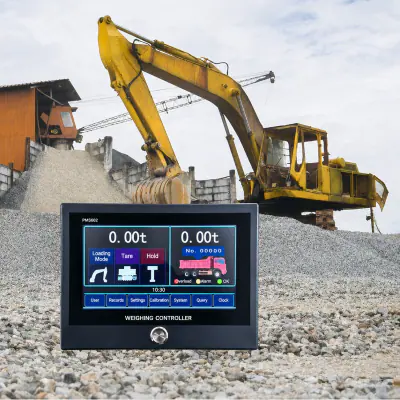 View product details
The excavator weighing system is designed for real-time weighing during excavator loading operations. It helps operators measure each bucket load and automatically calculate the accumulated total weight without interrupting normal working efficiency.
These systems measure at different points in the material flow and require different machine, site and acceptance evidence.
| Route | Best suited to | Key questions before selection |
|---|---|---|
| Excavator weighing system | Bucket and accumulated information during a defined excavator dig, lift, swing and loading cycle. | Machine geometry, coupler and attachment, hydraulic and position inputs, valid motion, job records and site acceptance. |
| Wheel loader scale | Payload guidance during a wheel-loader lift and truck or stockpile loading workflow. | Loader and bucket, hydraulic arrangement, lift region, material, operator cycle and loading records. |
| Truck scale or weighbridge | Complete-vehicle weighing at a prepared fixed traffic lane and transaction point. | Vehicle flow, platform and foundation, gross and tare process, software, approvals and legal-use requirements. |
Evaluate bucket and accumulated information within the defined excavator loading cycle. The operator and supervisor can review the agreed onboard record before the downstream reconciliation step.
Collect the exact machine, geometry, coupler, attachment, hydraulic and sensor-position information first. The quotation is tied to the working configuration rather than a broad machine class.
Define valid measurement states, warnings and correction rules for partial dump, rehandle or aborted cycles. Operators have a documented response to exceptions instead of silently accepting every number.
Define record opening, identifiers, load commitment, correction, close-out and export behaviour before configuration. Measurement and job-data ownership can be tested together during site acceptance.
A machine name and operating mass are not enough to define an excavator bucket-weighing system. Include the working configuration and decision that follows the result.
State whether the result guides target loading, internal production records, truck dispatch or another named decision.
Record the excavator, boom, arm, coupler, attachment, hydraulics, power, existing displays and environmental conditions.
Identify the sensors, indicator, printer, accessories, measurement states, job fields and installation responsibilities.
Use the approved safe-work and product procedures, create the accepted attachment profile and document settings and reference conditions.
Run representative loads and operators, verify correction and invalid-cycle handling, reconcile job records and retain the acceptance file.
The material and industry help define the workflow, but the identified machine, attachment and acceptance plan still control the configuration.
Review bucket loads, haul-truck targets, stock movement, material IDs and reconciliation with the site’s downstream weighing route.
Review the applicationDefine cut, fill, zone, truck, subcontractor or job totals and how attachment or site changes are controlled.
Review the applicationAccount for machine duty, material variation, environmental exposure, shift records, truck flow and maintenance support.
Review the applicationReview grapples or buckets, variable material, rehandle cycles, contamination, operator exceptions and material classification.
Review the applicationClarify whether records follow vessel, stockpile, truck, rail, shift or job and how onboard totals are reconciled.
Review the applicationA component list or changing display value does not establish field accuracy, legal approval or acceptance. Those conclusions require the configured machine and documented test evidence.
FMSCales can coordinate the current excavator weighing system record, machine and attachment questions, quotation scope, document requests and job-data requirements with equipment dealers and weighing partners. The project record can retain the reviewed machine and configuration so service or repeat enquiries start from an identified baseline.
Our production environment supports fabrication, assembly and project preparation for selected industrial weighing equipment and system configurations.

Model-specific inspection, functional checks and calibration preparation help align the selected equipment, documentation and project requirements before delivery.
Ask for current documents tied to the exact quoted product and machine route. Application, revision and availability must be confirmed before installation or acceptance.
The excavator weighing system is designed for real-time weighing during excavator loading operations. It helps operators measure each bucket load and automatically calculate the accumulated total weight without interrupting normal working efficiency.
Selection and application guides
Selection and application guides
Selection and application guides
Selection and application guides
Channel partners can use one machine-and-cycle questionnaire to qualify the opportunity and separate product interest from the field engineering required for a usable proposal. Recording the machine, attachment, sensing, data and acceptance scope also creates a clearer reference for later service or repeat supply.
No. The machine, boom, arm, coupler, attachment, hydraulic arrangement, sensor positions, operator motion and required records must be reviewed before configuration.
Send the make, model, serial series, boom and arm configuration, coupler, attachments, hydraulic information, work cycle, material, job records, quantity and destination.
The current product description uses hydraulic-pressure and angle or position inputs with an indicator. The exact sensing points, valid motion and calculation conditions remain configuration-specific.
The current product record describes individual load, accumulated weight, truck, cargo, loading-count and time information. Confirm the exact fields, workflow, printer and export route in the quotation.
Freeze the machine and attachment configuration, define the reference and calculation basis, test representative load bands and cycles, include exceptions and retain every indicated and reference result.
Not automatically. An excavator system supports an onboard bucket and loading decision, while a weighbridge records the complete vehicle at a prepared transaction point. Intended use determines the route.
That cannot be inferred from the category or a calibration record. Confirm exact-system approval, installation, verification and jurisdictional requirements before any regulated use.
Include excavator make and model, boom and arm, coupler and attachment, hydraulic information, material and cycle, required records, reference plan, quantity and destination.
Share the working configuration and result needed so the first response addresses the actual machine and project.
Send your core application details. We will review the request and follow up by email or Tel / WhatsApp.