Permanent vehicle weighing for controlled site workflows
Truck Scales & Weighbridges for Industrial Vehicle Weighing
What a truck scale project needs to settle before purchase
Plan a truck scale as a complete site and transaction system—not only a steel platform. FMSCales reviews the vehicle envelope, required gross, tare and net records, traffic flow, foundation interfaces, load cells, indicator, software, peripherals, acceptance method and destination before confirming a project quotation.
Fit the real vehicle envelopeDefine vehicle types, wheelbase, axle arrangement, maximum expected gross load and the platform area required for the intended weighing method.
Design the site and traffic routeReview approaches, foundation, drainage, access, queuing, barriers, safety zones, utilities and service space with the responsible local parties.
Build the complete weight recordSpecify vehicle, customer, material, order, gross, tare, net, operator, time and exception states before choosing software or peripherals.
Agree acceptance and legal-use boundariesDefine installation checks, reference equipment, test vehicles, transaction tests and jurisdiction-specific document review for the exact quoted system.
A project-led weighbridge range for dealers and industrial sites
This range supports weighing-equipment distributors, logistics and industrial sites, mines, quarries, ports, agricultural operations and system integrators planning a permanent complete-vehicle weighing point. Compare platform and system scope around the vehicles, site, traffic, software and transaction needs, then send a project brief for configuration and quotation review.
The final scope depends on the identified site, vehicles, platform, civil design, traffic workflow, transaction record and intended use. This page does not promise a universal configuration, approval class or installed result.
Product and decision routes
Choose the next route for your vehicle weighing project
Truck Scales: Open a product page for model-specific specifications, images and configuration details.
Use the product page to review the steel-platform system, current images and listed component scope before confirming dimensions, capacity, foundation, instrument and software requirements.
Work through vehicle data, platform and foundation interfaces, traffic, load cells, indicator, software, responsibilities and acceptance before comparing quotations.
Choose from the required result, site permanence, traffic flow, civil work, vehicle procedure and verification route rather than treating the two systems as interchangeable.
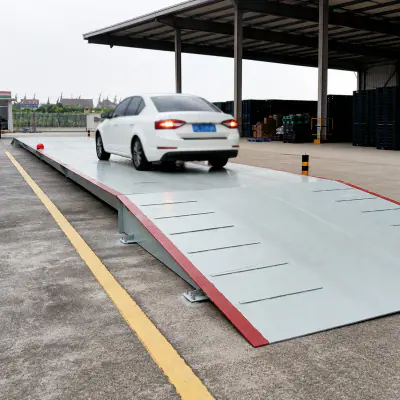
The truck scale, also known as a weighbridge, is an industrial weighing system designed for weighing large vehicles such as trucks, trailers, container trucks, bulk material trucks, and construction vehicles.
Permanent truck scale, portable axle scale or onboard weighing?
These routes measure at different points and produce different records. Select the weighing point that controls the buyer’s actual vehicle or material decision.
Route
Best suited to
Key questions before selection
Permanent truck scale or weighbridge
Repeated complete-vehicle gross, tare and net transactions at a prepared fixed lane.
Wheel, axle or axle-group checks where mobility or temporary deployment is important.
Surface, levelling, pad quantity, wheel loads, vehicle procedure, record type, throughput, verification and intended use.
Loader or excavator onboard weighing
Payload guidance and material records during a defined loading-machine cycle.
Machine and attachment, hydraulic and motion route, operator cycle, target record and reconciliation with the vehicle transaction.
Buyer problems and project response
Resolve the project risks that a platform-only quotation misses
The quoted deck does not fit the vehicle operation
Define vehicle envelope, wheelbase, axle arrangement, gross load, turning path, approach and complete-vehicle positioning. The platform and traffic concept can be reviewed against the vehicles that will actually use the site.
Civil and equipment responsibilities are unclear
Separate platform supply, foundation and approaches, drainage, utilities, grounding, lifting, installation, commissioning and local design approval. The buyer can compare complete project boundaries instead of discovering gaps after delivery.
The scale displays weight but the transaction fails
Design vehicle identification, gross/tare/net logic, duplicate prevention, manual changes, printing, barriers, cameras, offline states and reconciliation. The accepted record is tied to the business workflow, not merely to a displayed number.
Performance or approval is assumed from a component
Agree the installed-system test, reference equipment, vehicle cases, tolerances, documents and responsible authority before award. The acceptance decision is based on the exact system, site, procedure and intended use.
Selection inputs
Select a truck scale from the complete site and transaction route
A useful first response needs the site and workflow as well as the requested scale. Share available drawings and photographs; unknown fields can be resolved during project review.
Vehicle and load envelopeRecord vehicle classes, wheelbase and axle range, maximum expected gross load, traffic direction and any unusual or off-centre loading cases.
Platform and access routeDefine required deck length and width, pit or pitless concept, approaches, turning space, queuing, barriers and safe pedestrian separation.
Civil and environmental interfacesSurvey ground, drainage, flooding, temperature, corrosion, utilities, earthing, lightning exposure, service access and local engineering responsibility.
Instrument and transaction logicSpecify indicator, operator controls, stable-weight rule, gross/tare/net process, manual corrections, permissions, printing and audit history.
Peripherals and data integrationDescribe vehicle ID, traffic lights, barriers, cameras, displays, printer, database, ERP interface, offline behaviour and ownership of each field.
Acceptance and lifecycle supportAgree installation checks, calibration and verification route, test vehicles, training, backups, spares, maintenance access and change control.
Capacity, division and platform sizeSize the scale at about 1.25 times the maximum expected gross vehicle load. Common project configurations run from 60 to 150 t with 20 kg divisions under OIML class III practice; platform lengths of 9 to 24 m cover rigid trucks through multi-trailer combinations.
Pit or pitless deck conceptA pit-mounted deck sits flush with the ground and suits tight sites but needs drainage and deeper civil work; a surface-mounted deck installs faster and simplifies cleaning and service access but requires approach ramps or a level entry route.
Project workflow
Move from site survey to a controlled weighbridge handover
01
Define the weighing decision
Record who uses the result, which vehicle transaction is accepted and which business action follows gross, tare or net weight.
02
Survey vehicles, site and traffic
Collect the vehicle envelope, loads, traffic direction, foundation area, approaches, drainage, utilities and local design constraints.
03
Configure the complete system
Match the platform, load cells, junction box, indicator, cabling, peripherals, software, interfaces and documents to the project.
Define truck scale review and acceptance before award
Installed performance and legal-use status cannot be inferred from a platform, load cell or indicator description. Acceptance must address the exact system, prepared site, operating procedure, reference equipment and jurisdiction.
Verify the delivered platform, load cells, junction box, indicator, cabling, peripherals and software against the approved scope
Inspect foundation interfaces, approaches, clearances, drainage, earthing, cable protection and service access
Complete installation, configuration, zero, calibration and applicable verification checks under the agreed method
Test representative vehicles plus gross, tare, net, duplicate, manual, offline and recovery transaction states
Retain configuration backups, test results, user training, maintenance responsibilities and change-control records
Company capability
FMSCales support from weighbridge selection to project handover
FMSCales supports truck scale projects through application review, product and component matching, document coordination, quotation clarification, data-interface discussion and handover planning. The response is tied to the buyer’s vehicles, site, workflow and destination rather than a generic deck description.
Platform, component and accessory scope is confirmed in the project quotation
Civil, installation, calibration, software and local responsibilities are assigned before handover
OEM, private-label, spare-parts and repeat-project support is reviewed for the agreed configuration
Production and assembly environment used for industrial weighing project preparation.
Production Capability
Our Factory
Our production environment supports fabrication, assembly and project preparation for selected industrial weighing equipment and system configurations.
Inspection and calibration-preparation workflow for industrial weighing equipment.
Inspection & Calibration Preparation
Our Laboratory
Model-specific inspection, functional checks and calibration preparation help align the selected equipment, documentation and project requirements before delivery.
Technical resources
Documents to request for the quoted truck scale
Ask for current documents tied to the exact platform, components, software and project responsibilities. Availability, revision and destination scope should be confirmed before civil work or installation.
The truck scale, also known as a weighbridge, is an industrial weighing system designed for weighing large vehicles such as trucks, trailers, container trucks, bulk material trucks, and construction vehicles.
Truck scale project support for dealers and integrators
Weighing distributors, civil and traffic partners, software integrators and industrial equipment companies can coordinate a complete weighbridge opportunity through one project brief. Share the site, vehicles, transaction and responsibility map so technical and commercial follow-up stays aligned.
Application and site-data review before configuration
Platform, load-cell, indicator and peripheral scope coordination
Civil-interface and installation responsibility clarification
Software, vehicle-ID, traffic and data-integration discussion
Current document, drawing and packing coordination
Sample project, tender and repeat-project planning
Spare-parts, training and after-sales route definition
Guides for planning, comparing and maintaining truck scales
Use these guides to prepare the site and transaction specification before comparing equipment. The comparison guides also clarify when a portable axle scale or low-speed WIM route may fit better than a permanent weighbridge.
Truck scale and weighbridge questions from project buyers
What information is needed to quote a truck scale?
Provide the vehicle types, wheelbase and axle arrangements, maximum expected gross load, required transaction, platform and site information, traffic flow, peripherals, software, intended use, project responsibilities, quantity and destination. A site plan and photographs help clarify the first review.
How do I choose the truck scale platform size?
Start with the longest and widest vehicles that must be completely positioned for the chosen weighing method. Confirm wheelbase, axle groups, turning path, approaches, safety clearances, traffic direction and any local requirements before fixing deck dimensions.
What normally forms a complete weighbridge system?
The current product route describes a steel platform, load cells, junction box, indicator, cabling and selected software. A project may also require civil interfaces, operator station, printer, remote display, vehicle ID, barriers, cameras, network equipment, installation and acceptance services.
Should I choose a truck scale or portable axle scales?
Choose from the required result and operating method. A permanent truck scale supports repeated complete-vehicle transactions at a prepared lane; portable pads support wheel or axle checks where mobility matters. Site, procedure, throughput, verification and intended-use boundaries differ.
What affects truck scale installation cost?
Cost depends on the platform and components, foundation and approaches, drainage, transport, lifting, installation, cabling, operator facilities, barriers, cameras, software, integration, calibration, verification, training and service scope. A site-specific quotation is more useful than an unsupported headline price.
How should a buyer compare truck scale manufacturers and suppliers?
Compare the documented project scope, product and component identity, drawings, responsibility matrix, software behaviour, acceptance method, packing, installation support, spares, warranty and service route. Confirm which party designs and signs off civil work and local compliance.
Is every truck scale approved for commercial weighing?
No approval should be assumed from the category name or a component certificate. Confirm the exact instrument configuration, installation, intended transaction, jurisdiction, approval documents and verification route with the responsible local parties before regulated use.
What is the difference between a pit and a pitless weighbridge?
A pit weighbridge mounts the deck flush with the roadway, saving space and easing multi-direction access, but it needs a deeper foundation, drainage and confined-space maintenance planning. A pitless or surface-mounted weighbridge sits above ground with ramps, installs faster and gives easier cleaning and load-cell access, at the cost of a longer overall site footprint.
What capacity and size of truck scale do I need?
Choose capacity from the heaviest fully loaded vehicle expected, then add roughly 25 percent headroom; most industrial projects fall between 60 and 150 t. Platform length should cover the longest vehicle combination with safe positioning margin—18 m by 3 m covers most articulated trucks, while 3.4 m widths and longer decks suit wide or multi-trailer vehicles.
How accurate is a truck scale and what does OIML class III mean?
Industrial weighbridges are typically built to OIML class III practice, with 10 or 20 kg verification divisions across the rated capacity. Installed accuracy depends on the complete system, foundation, calibration and verification method, so confirm the acceptance procedure and any legal-for-trade approval for your jurisdiction rather than relying on a component datasheet.
Truck scale project review
Tell us about the vehicles, site and weighing transaction
Include vehicle types and loads, required gross/tare/net record, site and approaches, platform preference, traffic, indicator, peripherals, software, intended use, quantity and destination.
Share the available project data so the first response can address the complete weighbridge scope rather than only platform dimensions.
No account required
Model-specific review
Tel / WhatsApp optional
Privacy choices
We use optional analytics to understand which pages help business buyers. Analytics stays off until you accept; declining does not affect site features.
Request a Quote
B2B PROJECT INQUIRY
Request a Quote
Send your core application details. We will review the request and follow up by email or Tel / WhatsApp.