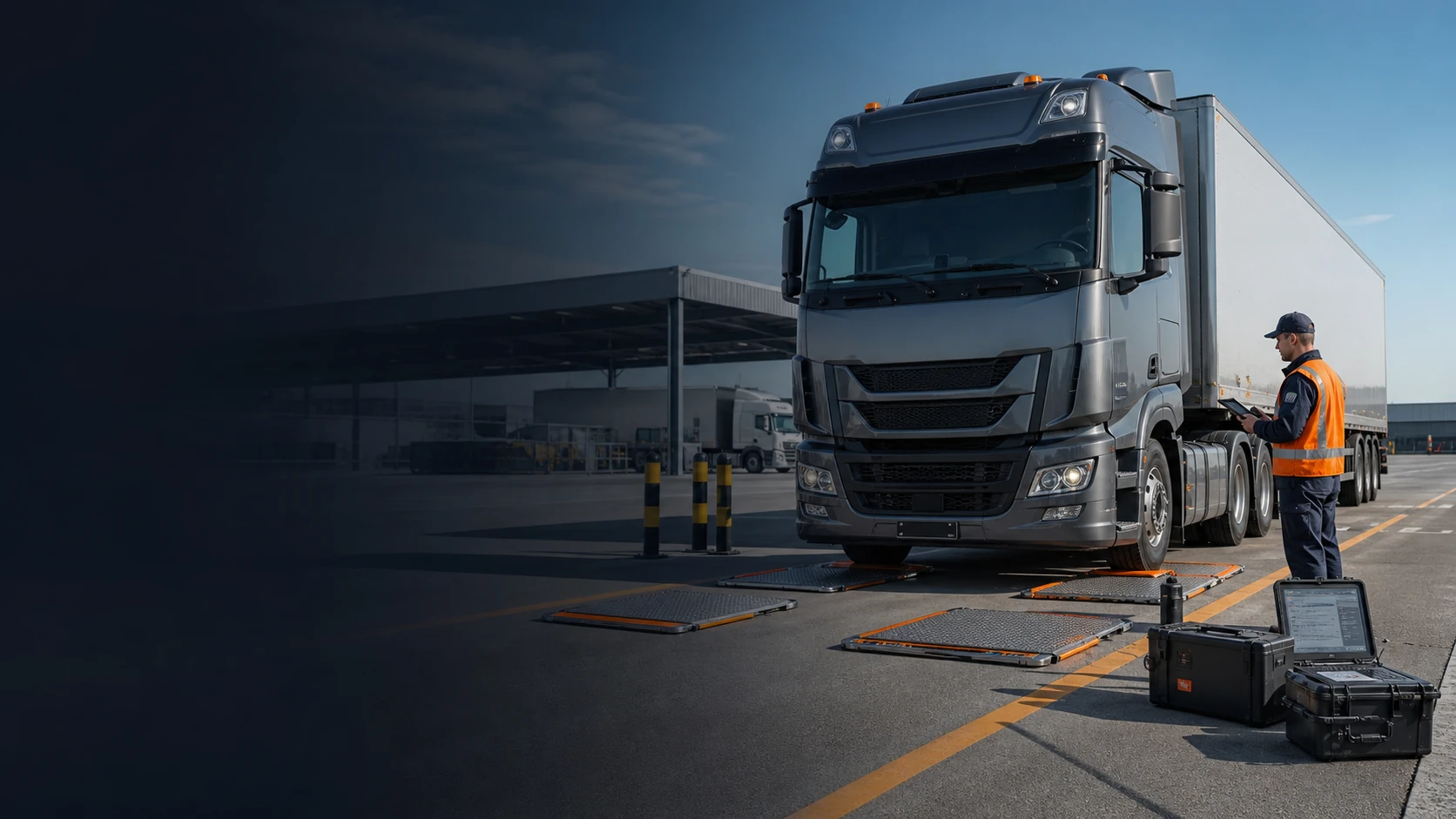
Choose portable axle scales when the weighing point must move, axle or wheel information matters, or a controlled pre-dispatch check is needed without a permanent foundation. Choose a fixed truck scale or weighbridge for repeated complete-vehicle weighing at a permanent site. The methods are not interchangeable: pad layout, levelling, vehicle procedure and legal-use evidence change the meaning of the result.
1. Compare the result before the hardware
Decide whether the operator needs individual wheel values, axle values, axle-group values or one complete-vehicle transaction. A total calculated from sequential axle measurements depends on the documented layout and procedure; it should not be treated as identical to a full-platform weighing without evaluation.
| Decision area | Portable axle scales | Fixed truck scale / weighbridge |
|---|---|---|
| Primary result | Wheel, axle and procedure-based gross results | Complete vehicle supported on a fixed platform |
| Location | Temporary or multiple controlled sites | One permanent weighing lane |
| Site work | Prepared level setup, pads, ramps or levelling | Foundation, approaches, drainage, cabling and traffic works |
| Throughput model | Setup and operator sequence govern flow | Permanent lane and transaction process govern flow |
| Diagnostic value | Can show wheel or axle distribution | Focuses on complete-vehicle gross, tare and net workflow |
2. Choose portable pads for mobility and axle information
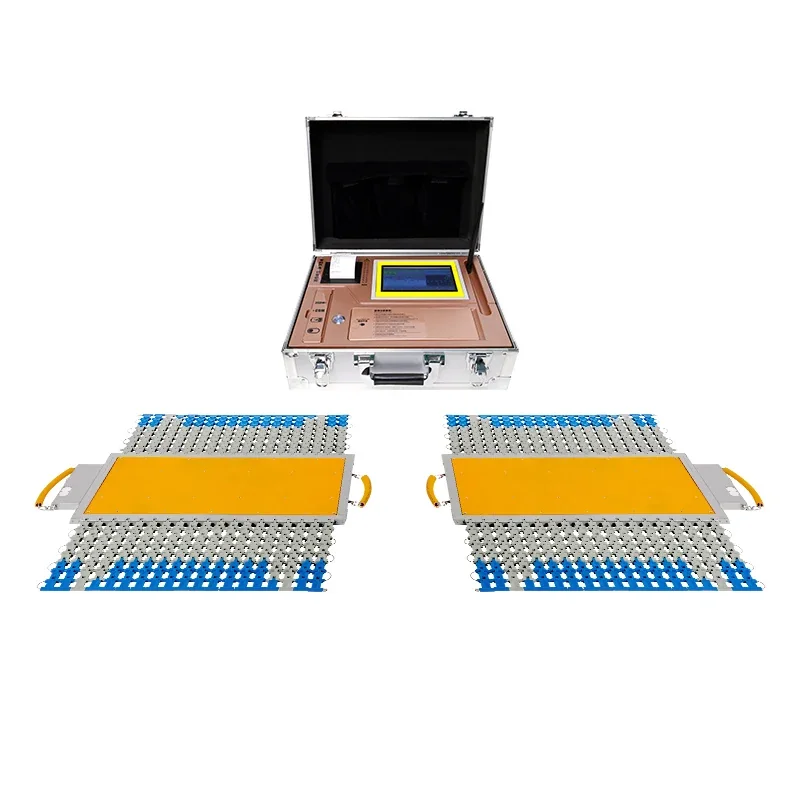
Portable pads can serve depots, field checks and rotating project sites when every location is assessed and operators follow the same setup. Transport cases do not remove the need for firm support, levelling, alignment and a repeatable vehicle sequence.
3. Choose a weighbridge for a permanent transaction lane
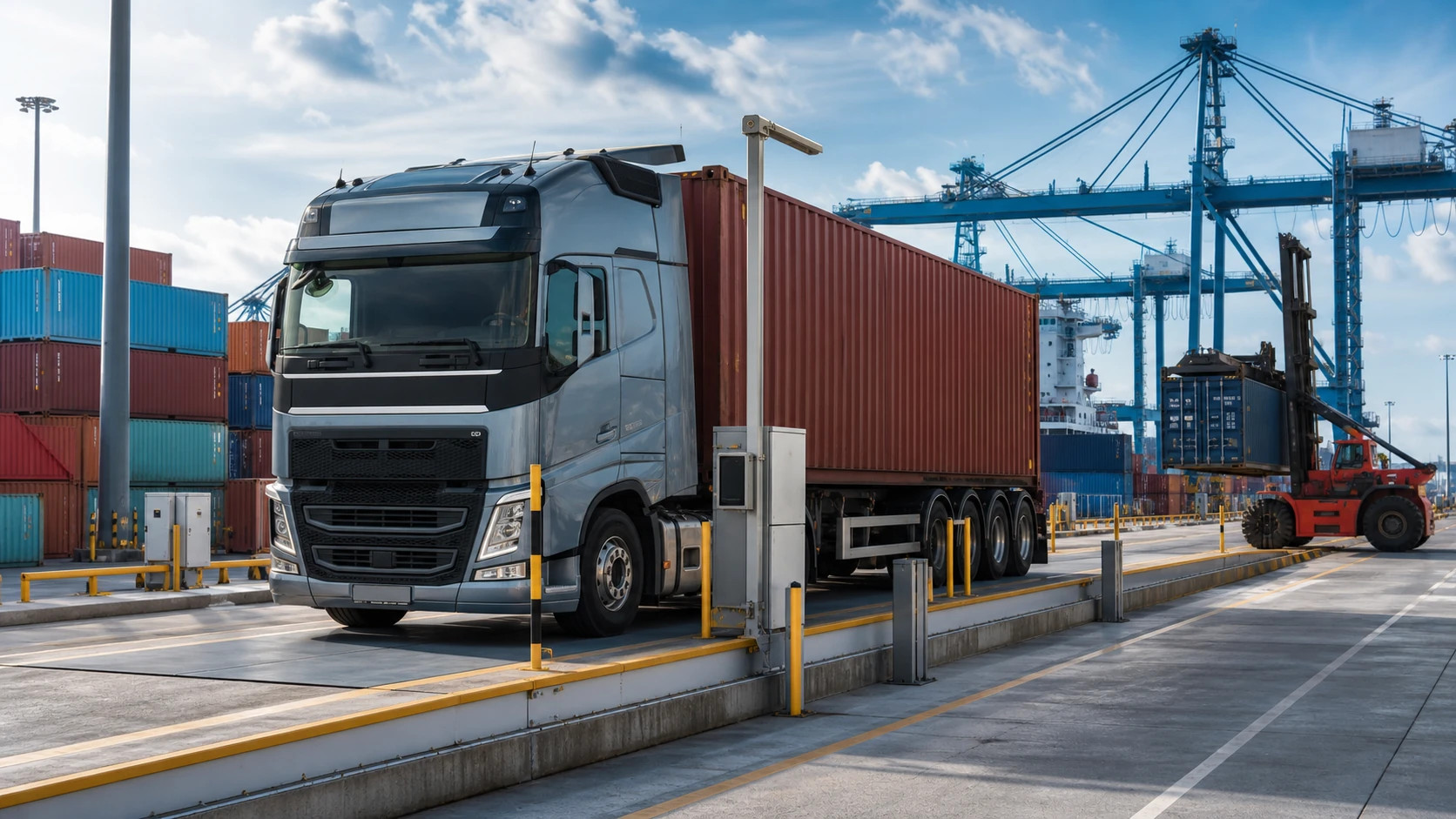
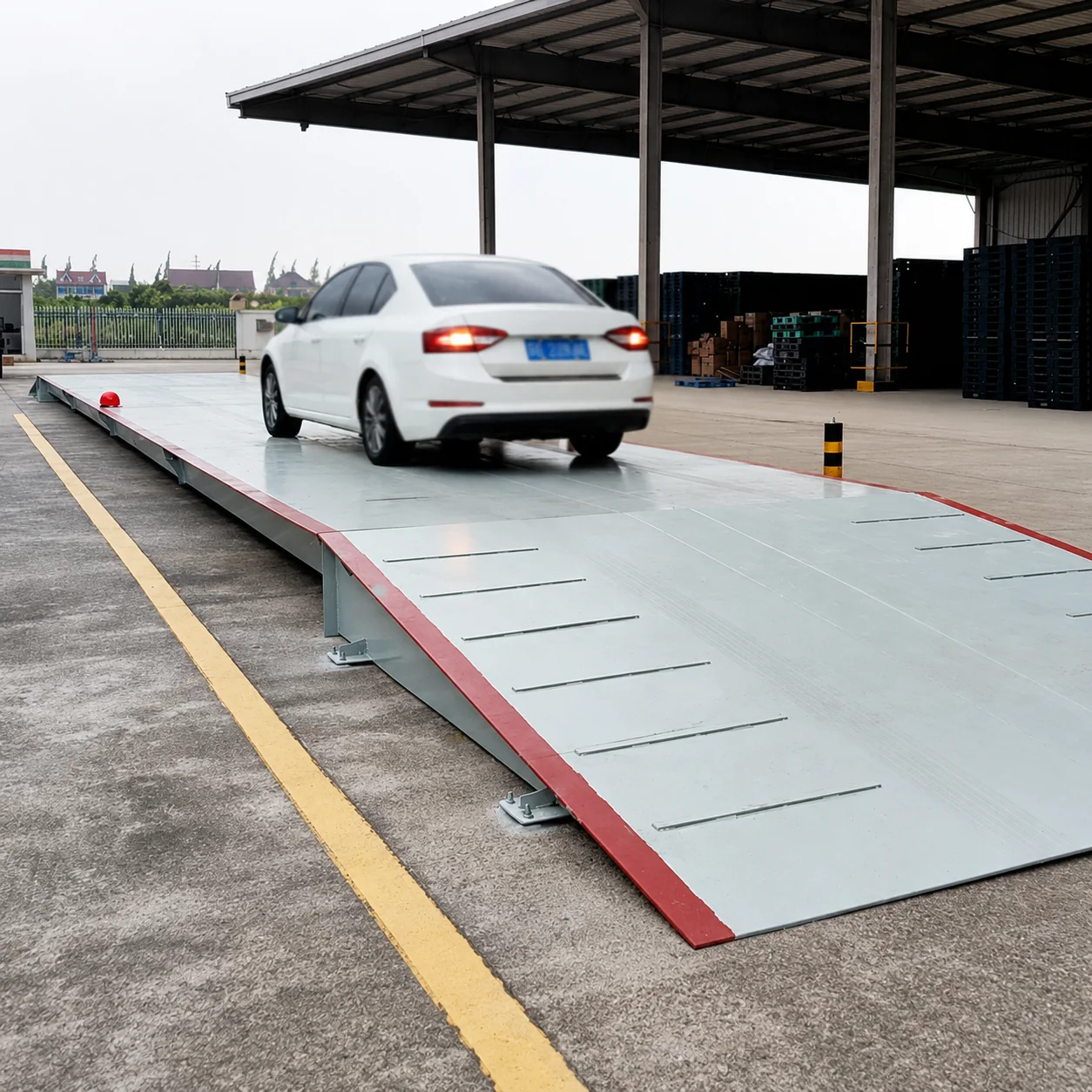
A fixed truck scale can integrate vehicle identification, gross/tare/net transactions, barriers, cameras, printers and site software around one controlled lane. The trade-off is permanent civil work, drainage, access, traffic design and maintenance responsibility.
4. Do not mix static and moving-vehicle promises
This page compares a static portable route with a fixed platform route. If vehicles will move over the sensors, use a system and site designed for weigh-in-motion and define speed, approach, alignment, test method and approval separately.
5. Verify the installed method, not a brochure label
For either route, document the exact instrument, load receptors, indicator, software, site, vehicle procedure, reference method and acceptance limits. Confirm local approval and verification requirements before using results for trade or enforcement.
Decision guidance
Use portable pads for a mobile or temporary controlled check where setup discipline is available. Use a fixed weighbridge when one permanent lane must support frequent, repeatable whole-vehicle transactions and the civil works can be justified.
Static portable axle weighing is different from low-speed weigh-in-motion; that operating-method comparison is covered separately. Approval, tolerances and enforcement use remain instrument-, procedure- and jurisdiction-specific.
Compare the meaning of the result
The central question in axle weighing vs traditional truck scales is whether the buyer needs wheel or axle information at movable sites, or a complete-vehicle transaction at one permanent lane. Civil work, vehicle procedure, throughput, data flow and legal-use evidence follow from that decision.
- Choose the required wheel, axle, axle-group or complete-vehicle result
- Compare temporary site approval with permanent foundation and approach work
- Model setup and operator time as part of throughput
- Verify each method under its own documented procedure
Buyer-task questions
Can sequential axle values always be treated as a weighbridge gross value?
No. The relationship depends on the pad layout, levelling, vehicle position, procedure and system approval. Evaluate the method for the intended decision.
Which route is easier to move between sites?
Portable pads are designed for mobility, but each site still needs an approved surface, setup and repeatable vehicle procedure.
References
The following official and first-party sources support the bounded examples, standards context and evaluation methods used in this guide. They do not verify an FMSCales configuration.
 Portable Axle Scales
 Truck Scales
 Weighing Indicators
 Load Cells