
Wireless Portable Axle Scale System
This product record lists a 10–200 t system range. The exact per-pad capacity, pad count, wireless configuration and weighing procedure must be confirmed for the project.
Open product pageWhat a portable axle weighing project needs to define
Portable axle scales support wheel, axle or axle-group weighing where a permanent weighbridge is not the preferred project route. Select the system from the vehicle loads, number of pads, site surface, operating procedure, required result and intended use. FMSCales currently presents two different product records; their listed ranges and scope must not be treated as interchangeable.
Compare portable truck scales and portable truck axle scales for fleet checks, transport operations and temporary weighing sites. Select the pad arrangement, capacity and operating procedure around the vehicles and ground conditions.
A portable axle scale quotation is based on the complete vehicle procedure, not only a headline tonnage.
Portable Axle Scales: Open a product page for model-specific specifications, images and configuration details.
This product record lists a 10–200 t system range. The exact per-pad capacity, pad count, wireless configuration and weighing procedure must be confirmed for the project.
Open product pageThis separate product record lists a 0–10 t capacity option for truck axle-load and vehicle-weight inspection. Confirm whether the listed option matches the expected wheel or axle load and required system arrangement.
Open product pageUse the guide to define the vehicle, pad arrangement, site, procedure, record and intended use before selecting either product.
Open product pageCompare mobility and axle information with the fixed-site, complete-vehicle transaction provided by a weighbridge.
Open product page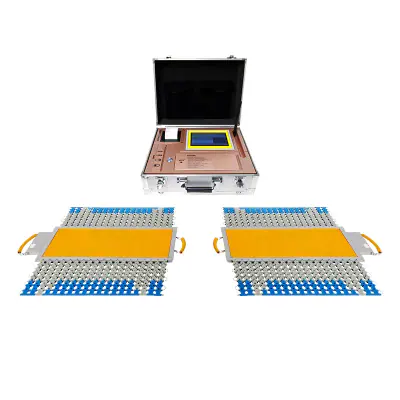 View product details
A portable wheel and axle weighing route selected from vehicle loads, pad quantity, site conditions, procedure and intended use.
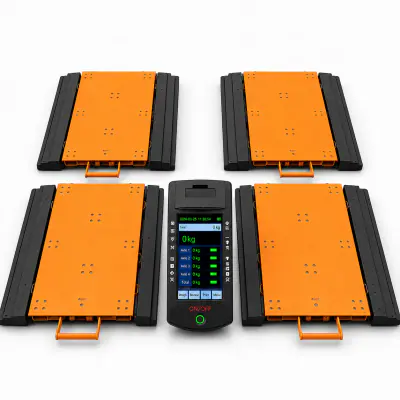 View product details
Portable Axle Scale for Truck Axle Load and Vehicle Weight Inspection.
The following comparison uses only the current product records. Final pad count, per-pad capacity, procedure and included accessories remain quotation items.
| Product record | Current listed scope / Use it as a starting point when | Confirm before quotation |
|---|---|---|
| Wireless Portable Axle Scale System | 10–200 t listed system range; portable wheel and axle weighing route. The project needs a broader system-level review across vehicle loads, pad quantity, site and intended procedure. | Per-pad capacity, number of pads, wireless arrangement, indicator or terminal, accessories, static or low-speed procedure and required result. |
| Portable Axle Scale for Truck Weight Inspection | 0–10 t listed capacity option; truck axle-load and vehicle-weight inspection route. The expected wheel or axle load can be assessed against the listed option and inspection workflow. | Meaning of the listed capacity for the quoted configuration, pad count, vehicle arrangement, display or terminal, site preparation and procedure. |
Evaluate a portable pad system for a controlled mobile or temporary procedure. The equipment can be planned around the sites and vehicles that actually need checking.
Confirm per-pad capacity, pad count, vehicle load distribution and the exact product configuration. The quotation separates the complete system range from the load applied to each device.
Specify the surface, levelling, approaches, alignment, stopping or speed method and sequence. Operators and buyers share one repeatable weighing procedure.
Define the measurement mode, intended decision and destination requirements before selecting the equipment. The product can be assessed against the real use case without overstating its role.
For distributors comparing portable axle scales for sale, an RFQ should define the vehicles, axle loads, site, procedure, records, quantity and destination; gross vehicle weight alone is not enough to select the system.
Agree on what is being checked, which vehicle records are needed and how the result will be used.
Record axle layouts, tyres, expected wheel and axle loads, gross load and the vehicles that set the upper requirement.
Check the surface, level, approaches, traffic control, pad arrangement and whether the method is static or controlled low speed.
Match the exact product record, pad quantity, per-pad capacity, terminal, communications, levelling equipment, cases and power to the project.
Agree on reference checks, operating instructions, acceptance records, periodic checks and storage or transport practice.
The application determines the equipment and procedure; a portable product name alone does not define suitability.
Review axle distribution and vehicle loading before dispatch or as part of an internal fleet-control procedure.
Review the applicationPlan portable equipment, traffic control, site selection, vehicle procedure, records and destination-specific authority requirements.
Review the applicationUse defined checking locations where a permanent platform is not the preferred route and the surface can support a repeatable procedure.
Review the applicationReview heavy vehicle configurations, temporary sites, surface preparation, environmental exposure and transport between locations.
Review the applicationDistributors can define a demonstration procedure that reflects the target customer’s vehicles rather than showing an unqualified headline result.
Review the applicationNo category-level accuracy, legal-for-trade status or vehicle-range guarantee is stated. These depend on the exact configuration, procedure, calibration evidence and destination requirements.
FMSCales can help weighing distributors and project partners compare the two current product records, organise the vehicle and site information, define the quotation scope and request current product documents. The buyer and local project parties remain responsible for the operating procedure, site control and destination-specific acceptance requirements.
Our production environment supports fabrication, assembly and project preparation for selected industrial weighing equipment and system configurations.

Model-specific inspection, functional checks and calibration preparation help align the selected equipment, documentation and project requirements before delivery.
Request documents for the exact product, pad and terminal configuration. Availability and revision must be confirmed before operational or regulatory use.
A portable wheel and axle weighing route selected from vehicle loads, pad quantity, site conditions, procedure and intended use.
Portable Axle Scale for Truck Axle Load and Vehicle Weight Inspection.
The field video shows a heavy vehicle passing over portable axle-weighing pads during a practical demonstration.
Selection and application guides
Selection and application guides
Selection and application guides
Selection and application guides
Channel partners can use one vehicle-and-site questionnaire to qualify the opportunity, select the correct product route and explain why the procedure matters. This creates a clearer proposal for the end buyer and a repeatable reference for later orders.
The Wireless Portable Axle Scale System lists a 10–200 t system range. The Portable Axle Scale for Truck Weight Inspection is a separate record with a 0–10 t capacity option. Per-pad capacity, pad count, terminal, accessories and procedure must be confirmed for either quotation.
No such conclusion should be made. A system range and an individual pad capacity are different values. Ask for the exact pad count, per-pad capacity, vehicle arrangement and weighing procedure in the quotation.
A system may calculate a vehicle result from wheel or axle measurements when the configuration and procedure support it. Define the required result and verify the method for the selected system.
No. Static and controlled low-speed operation are different routes. The exact model capability, speed or stopping procedure, site preparation and acceptance method must be confirmed.
The weighing area and approaches should support the specified equipment and repeatable vehicle procedure. Surface strength, level, debris, drainage, alignment and traffic control should be reviewed before use.
That cannot be determined from the product category alone. Check the exact model evidence, calibration and verification route, local regulations, authority requirements and intended use in the destination.
Send vehicle and axle details, expected loads, required result, static or low-speed procedure, site conditions, pad quantity concept, display and data needs, intended use, quantity and destination.
A portable truck scale measures wheel or axle loads and calculates the vehicle total, so its result depends more on surface level, procedure and operator discipline than a full-draft weighbridge. For internal load control and overload screening this is usually sufficient; confirm accuracy expectations and any approval needs before relying on the figures commercially.
They make sense when weighing points move between sites, projects are temporary, vehicles or trailers vary widely, or groundwork budgets are limited. A weighbridge wins when one entrance handles steady truck traffic every day and legal-for-trade results are required at that point.
Typical kits combine weighing pads, a display or wireless terminal, connection cables, levelling or approach accessories and transport cases. Confirm pad count, capacity per pad, terminal functions and any printer or data export before quotation so the kit matches the intended trucks.
Include vehicle and axle types, expected loads, required result, static or low-speed procedure, site surface, pad arrangement, data needs, intended use, quantity and destination.
Share the information needed to choose between the two product records and define a complete pad, terminal and accessory scope.
Send your core application details. We will review the request and follow up by email or Tel / WhatsApp.