
Complete belt scale project
Start here when the buyer needs the complete measurement chain and has not yet defined the weigh frame, load cells, idlers, speed sensing, controller and calibration route.
Open product pageStart with the conveyor, not only the instrument
A complete belt scale is a measurement system built around the conveyor: the weighing structure, load cells, suitable idlers, speed sensing, controller or integrator, installation conditions and calibration method must work together. FMSCales also lists belt scale controllers for projects that already have a defined mechanical and sensor arrangement. Confirm which route you need before comparing models.
This category supports conveyor manufacturers, engineering contractors, mines, quarries, cement and bulk-material plants, industrial scale distributors and process-instrumentation partners comparing conveyor belt scales. A complete conveyor weighing system includes the mechanical weighing route, sensing, speed input, controller or integrator and project verification plan; use each product page to confirm a particular model, display, power, I/O and communication configuration.
A controller listing is not presented as a complete conveyor belt scale. The full project scope must be defined in the quotation.
Belt Scales: Open a product page for model-specific specifications, images and configuration details.
Start here when the buyer needs the complete measurement chain and has not yet defined the weigh frame, load cells, idlers, speed sensing, controller and calibration route.
Open product pageReview a local keypad and display route for an existing or separately engineered continuous belt-scale system.
Open product pageReview a panel-display route where the project needs on-screen statistics and data-management functions.
Open product pageCompare the listed BST100 records by control role, interface, power, load-cell connection, I/O and communication fields, then request the current model documents.
Open product page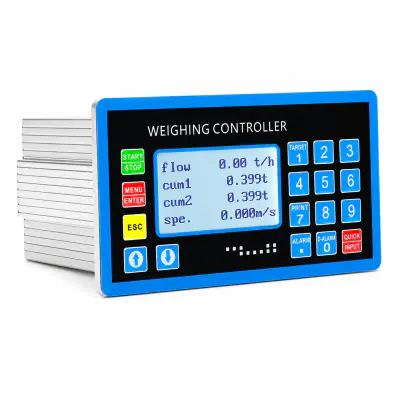 View product details
Keypad controller route for a continuous conveyor belt scale, with local flow-rate, accumulated-total and belt-speed readouts visible in the product image.
 View product details
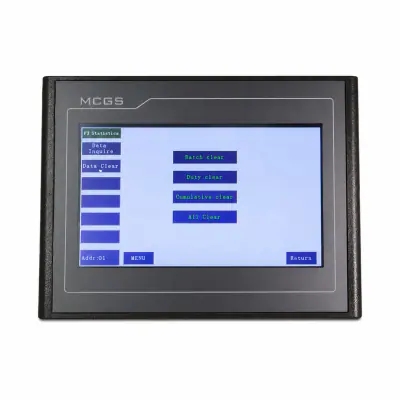
Panel-display controller route for a continuous conveyor belt scale, with statistics and data-management screens visible in the product image.
 View product details
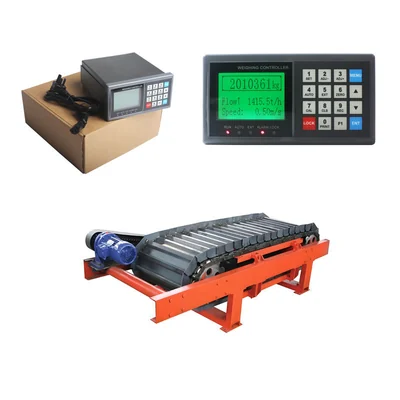
BST100-E11 is listed for loss-in-weight dosing and weigh-feeder control. Key specifications include a maximum connection of 8 load cells, 3 digital inputs, 4 relay outputs and an IP65 front-panel protection level for electrical and panel-fit comparison.
 View product details
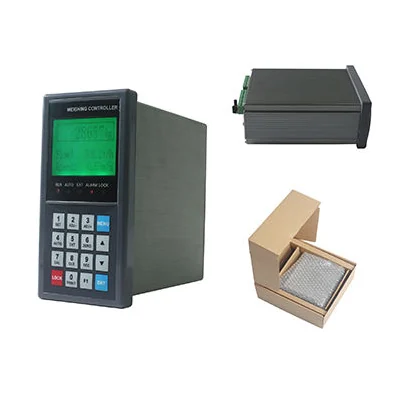
BST100-E01 is a continuous-conveyor weighing controller with an LCD interface. Compare its listed maximum connection of 8 load cells, 3 digital inputs, 4 relay outputs and IP65 front-panel protection with the conveyor signal and cabinet requirements.
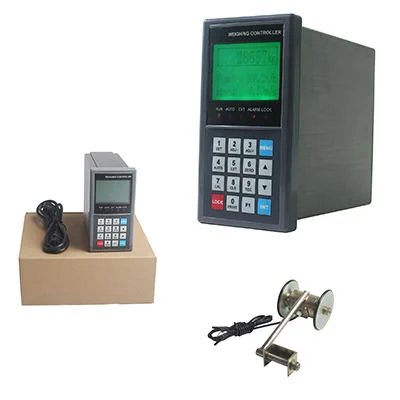 View product details
This LCD belt-scale instrument is listed for continuous flow indication and totalisation. The current selection data covers a maximum connection of 8 load cells, 3 digital inputs, 4 relay outputs and IP65 front-panel protection.
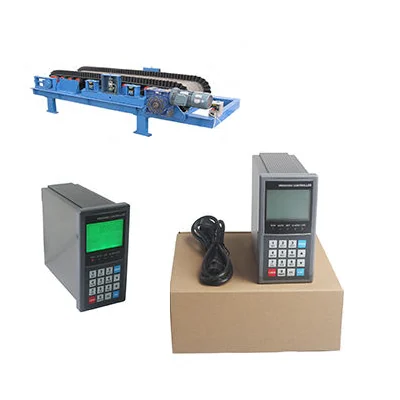 View product details
This conveyor controller route combines belt-scale indication with ration-weight and batch control. Its reviewed listing records a maximum connection of 8 load cells, 3 digital inputs, 4 relay outputs and IP65 front-panel protection.
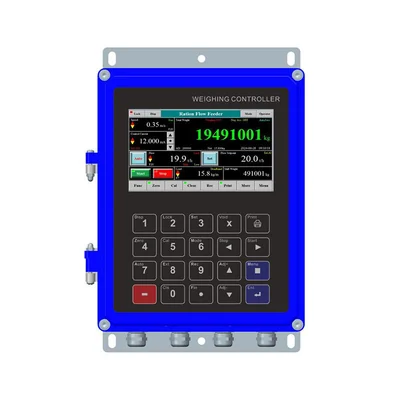 View product details
This touch-interface belt controller is listed for continuous conveyor weighing and feed control. Review the maximum connection of 8 load cells, 3 digital inputs, 4 relay outputs and IP65 front-panel protection against the planned sensor and control architecture.
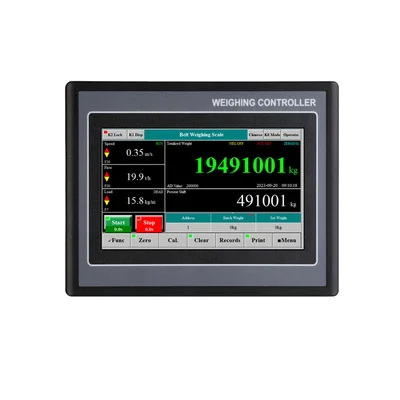 View product details
This touch-screen belt-scale instrument is presented for continuous conveyor weighing and controller integration. The reviewed listing covers a maximum connection of 8 load cells, 3 digital inputs, 4 relay outputs and IP65 front-panel protection.
 View product details
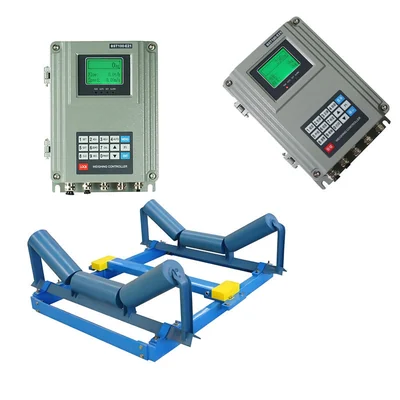
BST100-E21 provides an LCD controller route for continuous conveyor weighing in the listed coal-handling application. Its current comparison fields are a maximum connection of 8 load cells, 3 digital inputs, 4 relay outputs and IP65 front-panel protection.
 View product details
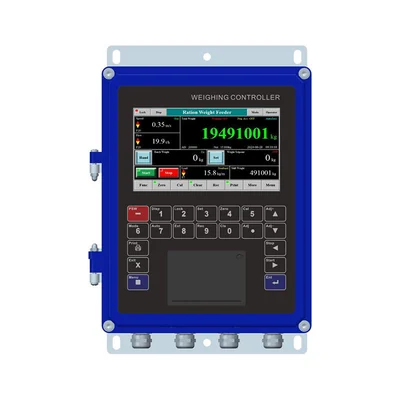
This touch-screen controller is listed for conveyor flow feeding and ration-weight batch control. Compare the reviewed maximum connection of 8 load cells, 3 digital inputs, 4 relay outputs and IP65 front-panel protection with the required operating sequence.
 View product details
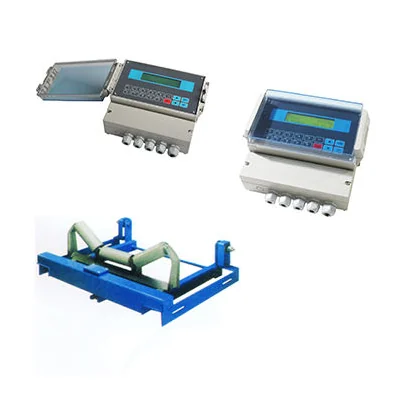
BST100-D52 is listed for continuous conveyor weighing and controller integration. Key specifications include a maximum connection of 8 load cells, IP65 front-panel protection, accuracy grade 0.5 and COM1/COM2 communication ports.
 View product details
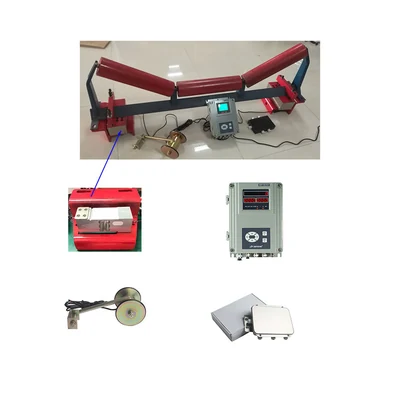
This BST100-B21 record is for continuous conveyor weighing and weigh-feeder control where the project needs an LCD operator interface and serial integration. The captured configuration lists AC220V power, an IP65 front panel, up to eight load-cell connections, three digital inputs, four relay outputs and RS232/RS485 options; confirm the exact model and test conditions before quotation.
 View product details
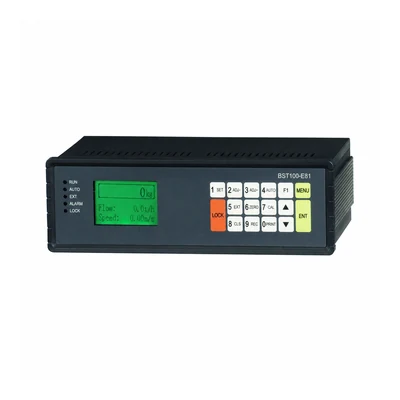
The BST100-E81 entity combines loss-in-weight dosing and belt-flow totalisation in one reviewed controller record. Its captured fields identify DC24V power, an IP65 front panel, up to eight load cells, three digital inputs, four relay outputs and RS232/RS485 communication; confirm the selected control mode before quotation.
 View product details
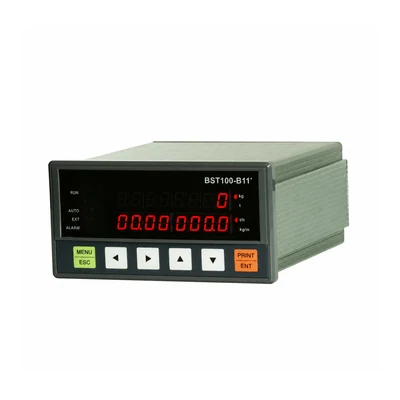
Reviewed product imagery identifies this LED belt-weigher controller as BST100-B11. The retained record is aimed at dynamic belt-feeder measurement with AC220V power, IP65 front-panel protection, up to eight load cells, three digital inputs, four relay outputs and RS232/RS485 communication; request the current B11 datasheet before design use.
Use this boundary before opening individual product records.
| Route | What it covers | What must be confirmed |
|---|---|---|
| Complete belt scale system | The conveyor weighing zone, mechanical frame, load cells, idlers, speed sensing, controller, wiring and calibration route as one project scope. | Conveyor survey, material, flow range, belt width and speed, loading profile, required result, environment, installation and acceptance. |
| Controller or integrator | Signal processing, display, totalisation, alarms, I/O and model-specific communications for an already defined measurement chain. | Sensor signals, speed input, power, enclosure, I/O, protocol, scaling, records and replacement compatibility. |
| Weigh-feeder or batching controller | A defined feed, ration or batch-control sequence rather than measurement alone. | Feeder mechanics, material behaviour, setpoints, control outputs, interlocks, refill or batch sequence and acceptance test. |
| Loss-in-weight controller | Mass-loss measurement and dosing control around a suitable vessel or feeder arrangement. | Vessel mechanics, refill state, sampling, disturbance handling, control sequence and exact model mode. |
Separate the mechanical weighing zone, sensors, speed measurement, instrumentation and calibration scope. The quotation shows what is included and what must be supplied or engineered elsewhere.
Record the load-cell, speed, I/O, power and communication requirements before choosing a model. The distributor can compare products against the actual control architecture.
Plan zero checks, reference tests, material tests where applicable and access for inspection before installation. Commissioning and later verification have a defined route rather than an improvised one.
Define whether the system measures, totals, regulates feed, batches or controls loss-in-weight operation. The requested controller function can be tied to the real process task.
A conveyor photograph and the words “belt scale” are not enough to define the measurement chain.
State whether the project measures and totals material or also controls feeding, batching or loss-in-weight operation.
Collect the geometry, belt, idlers, structure, loading profile, flow range, environment and available weighing-zone information.
Identify the mechanical frame, load cells, speed sensing, controller, wiring, power, I/O and communications in scope.
Compare the exact controller role, interface, power and available I/O against the project rather than selecting from the display style alone.
Agree on mechanical preparation, alignment, wiring, zero checks, test method, material test where applicable and the acceptance record.
The material and conveyor determine the project; these examples do not make every listed controller suitable for every process.
Review variable loading, material size, belt condition, structure, dust, access and the required shift or production total.
Review the applicationDefine process reporting, stock movement, feed or blending requirements and how the result reaches plant control.
Review the applicationClarify material behaviour, hygiene or corrosion conditions, feed or batch function and cleaning access.
Review the applicationAccount for changing bulk density, irregular loading, belt tracking, contamination and the purpose of the total.
Review the applicationSeparate simple flow measurement from a controller that must execute setpoints, outputs, interlocks and a defined process sequence.
Review the applicationAny accuracy or flow-control value belongs to the exact configured instrument and test conditions. The category page does not extend a model specification to a complete conveyor installation.
FMSCales can help distributors and project partners separate the complete belt-scale scope from the controller requirement, compare listed models against the required function and coordinate current product-document requests. Mechanical conveyor engineering, installation and site acceptance responsibilities must be assigned to qualified project parties.
Our production environment supports fabrication, assembly and project preparation for selected industrial weighing equipment and system configurations.

Model-specific inspection, functional checks and calibration preparation help align the selected equipment, documentation and project requirements before delivery.
Request current, model-specific documents. A generic controller image or old product page should not be used as design documentation.
Keypad controller route for a continuous conveyor belt scale, with local flow-rate, accumulated-total and belt-speed readouts visible in the product image.
Panel-display controller route for a continuous conveyor belt scale, with statistics and data-management screens visible in the product image.
BST100-E11 is listed for loss-in-weight dosing and weigh-feeder control. Key specifications include a maximum connection of 8 load cells, 3 digital inputs, 4 relay outputs and an IP65 front-panel protection level for electrical and panel-fit comparison.
BST100-E01 is a continuous-conveyor weighing controller with an LCD interface. Compare its listed maximum connection of 8 load cells, 3 digital inputs, 4 relay outputs and IP65 front-panel protection with the conveyor signal and cabinet requirements.
This LCD belt-scale instrument is listed for continuous flow indication and totalisation. The current selection data covers a maximum connection of 8 load cells, 3 digital inputs, 4 relay outputs and IP65 front-panel protection.
This conveyor controller route combines belt-scale indication with ration-weight and batch control. Its reviewed listing records a maximum connection of 8 load cells, 3 digital inputs, 4 relay outputs and IP65 front-panel protection.
Field photographs and videos document weigh-frame work, conveyor context, controller enclosures and a Spanish-language interface demonstration.
Selection and application guides
Selection and application guides
Selection and application guides
Selection and application guides
Selection and application guides
Belt Scale Evaluation Purchase in Venezuela. Published purchase-stage records show how product discussions and technical coordination develop in real projects.
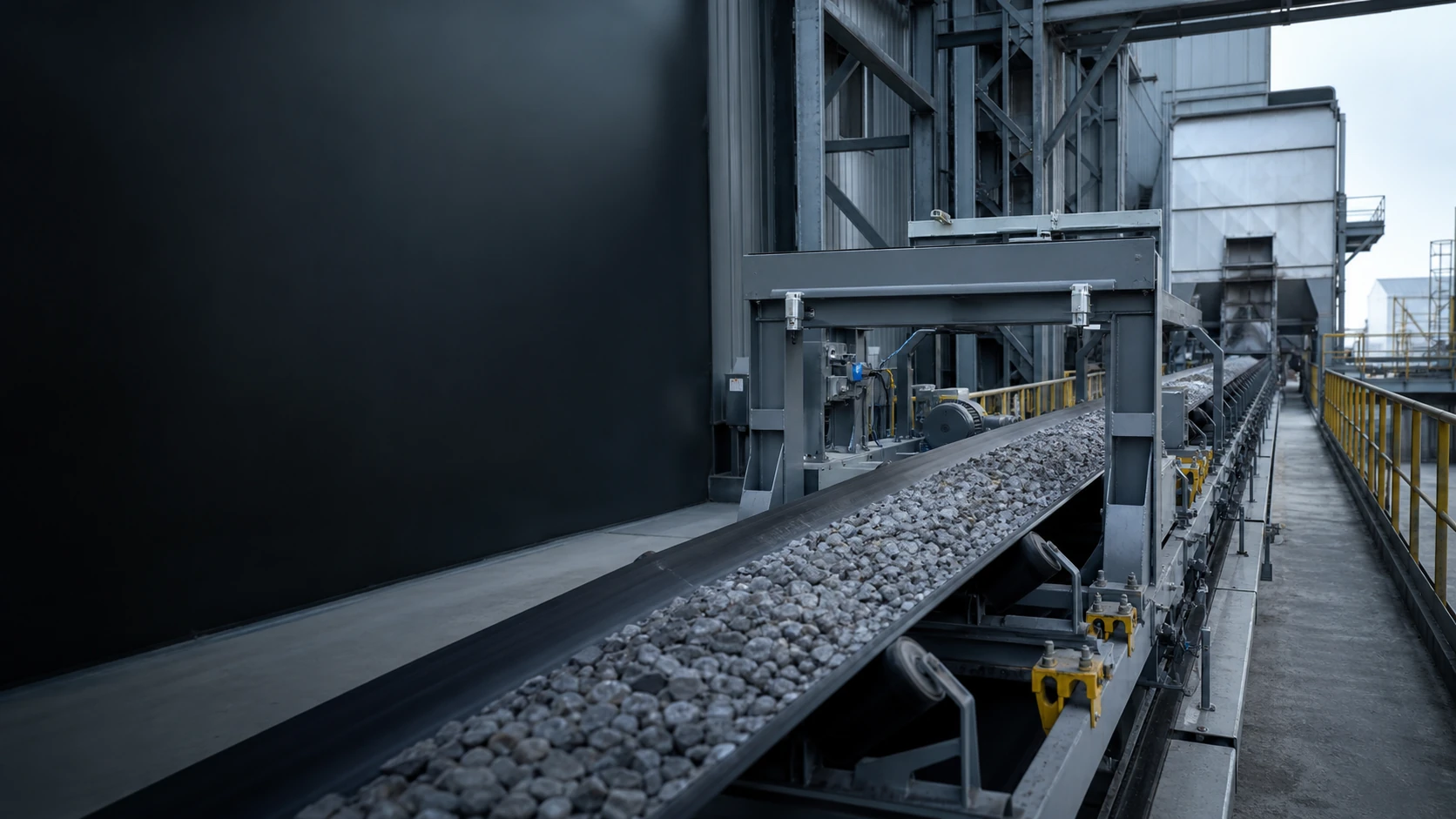
A Venezuelan weighing specialist purchased one belt-scale unit for evaluation. The cooperation has included product communication, delivery and after-sales technical coordination.
View project detailsChannel partners can submit one structured conveyor brief and receive a quotation framed around the correct system or controller route. This helps sales teams avoid presenting an instrument as a complete system and gives technical teams a common list of items to confirm.
No. A controller handles signal processing, display, totals, I/O or control functions. A complete belt scale also requires the mechanical weighing arrangement, load cells, suitable idlers, speed sensing, installation conditions, wiring and calibration method.
Provide the conveyor geometry, belt width and speed, idlers, material, flow range, loading profile, required result, environment, interface requirements and planned calibration method.
Only after the existing load cells, speed sensor, power, I/O, communications, scaling, panel fit and required functions are checked against the proposed model.
The choice depends on the exact process sequence, feeder or hopper arrangement, setpoints, I/O, interlocks, material behaviour and acceptance test. A display or totaliser is not automatically a feed controller.
The project needs an agreed sequence for inspection, zero checks, reference or simulated-load checks and a material test where applicable. The method and acceptance limits must be defined for the installed system.
It may be possible with a suitable model and interface. Confirm the physical connection, protocol, data fields, units, update behaviour, alarms, acknowledgement and failure handling before ordering.
Yes. Send the required product route, function, quantity, destination, branding or packaging request and current technical information. Availability and scope are confirmed in the quotation.
Include the conveyor, material, flow range, required function, existing sensors or controller, power, I/O, communications, quantity, destination and project schedule.
A clear scope is the fastest way to compare the correct belt scale products and avoid missing mechanical, signal or calibration items.
Send your core application details. We will review the request and follow up by email or Tel / WhatsApp.