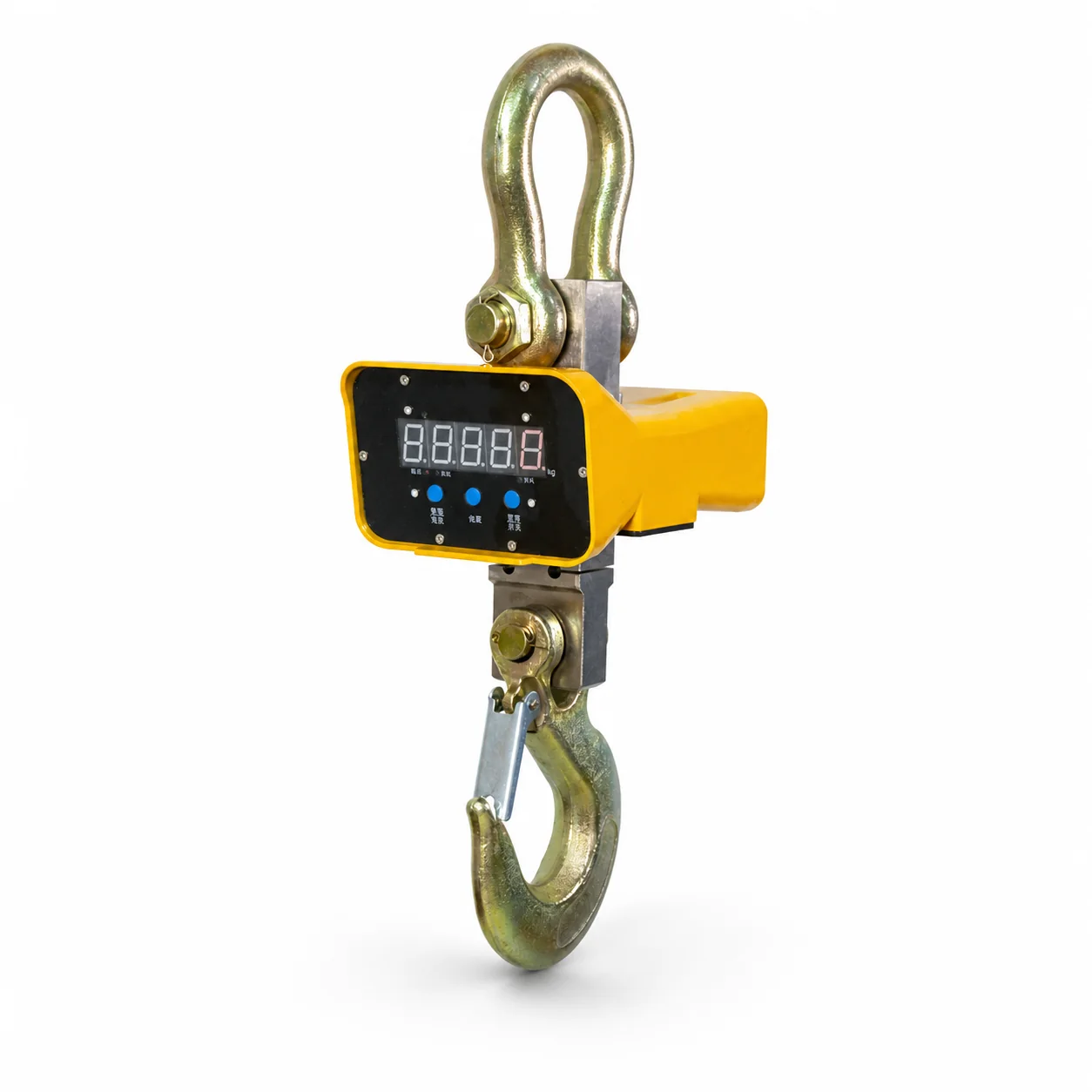
Select a crane scale from the maximum suspended load, minimum useful result, rigging interfaces, available headroom, display distance, environment, duty pattern and required record. Any claim about crane scale accuracy must be evaluated for the complete configured instrument under a defined test. The scale does not replace crane, hook, shackle, wire-rope, operator or lift-plan controls, and qualified personnel must own inspection and safe-use decisions.
1. Review every component in the suspended load path
Map the load from the crane hook through the upper connection, scale body, lower connection, rigging and lifted item. Record interface dimensions, orientation, available articulation, headroom, centre of gravity and any condition that can introduce side load, twist, impact or binding.
The weighing device must not be treated as permission to exceed the rated limits of the crane or rigging. Final selection and use require the applicable manufacturer information and review by competent lifting personnel.
- Maximum credible suspended load and rigging weight
- Hook, shackle and connection geometry
- Available headroom and safe clearance
- Static, repeated, impact or process duty
- Indoor, outdoor, heat, dust, rain or corrosion exposure
2. Define the working range and the decision it supports
A headline maximum capacity does not describe the task. State the minimum load that must influence a decision, the normal operating range, the maximum permitted load for the approved arrangement, the required unit and the action taken after the result.
Separate internal process guidance from commercial or regulated measurement. If the result affects invoicing, enforcement or another controlled use, identify the jurisdiction and approval route before selecting the model.
3. A high accuracy crane scale is a requirement to verify, not a product class
Ask the supplier to state performance with the load range, environmental and loading conditions, warm-up, reference, repetitions and calculation method. Display resolution, converter counts or a load-cell classification do not establish the result of the installed suspended instrument.
The acceptance test should use suitable reference loads and a controlled arrangement approved for the site. Record zero, repeat results, relevant test points, indication behaviour and any limits. Adjustment and repair should follow the exact model procedure and assigned authority.
4. Specify how operators view, accept and record the result
Confirm viewing distance, digits, lighting, units, stability indication, battery state, overload or fault messages and remote-control authority. A wireless display or handset needs a defined communication range, pairing method, failure indication, charging plan and safe fallback.
If a record is required, define job or item ID, gross or net value, unit, time, operator, status and correction method. Verify the exact output or software capability; do not infer it from a generic product photograph.
5. Keep weighing checks separate from lifting-equipment inspection
Weighing verification asks whether the configured instrument produces acceptable results under a defined test. Lifting inspection addresses the safety and condition of the crane, hooks, ropes, connections, rigging and related equipment. The two activities can inform each other but neither replaces the other.
OSHA requirements for overhead and gantry cranes distinguish frequent and periodic inspection and require unsafe conditions to be corrected before operation resumes. Applicability to a particular workplace and lifting arrangement must be determined by the responsible safety professionals and local rules.
| Review | Primary question | Typical owner |
|---|---|---|
| Lifting inspection | Is the crane and load path safe for the intended lift? | Qualified or designated lifting personnel |
| Weighing verification | Does the configured instrument meet the agreed measurement criterion? | Assigned metrology or service personnel |
| Legal verification | Is the instrument accepted for the regulated use? | Competent authority or authorised route |
| Operator check | Are visible conditions and indications acceptable before use? | Trained operator under the site procedure |
6. Build the quotation around documents and acceptance evidence
Request exact model and option codes, controlled data sheets, interface drawings, user and inspection instructions, battery and charger information, display or remote details, certificate scope where relevant and the proposed verification procedure.
The quotation should identify supplied shackles or adapters, installation and inspection exclusions, reference-load responsibility, training, spare battery or charger options, service route and the conditions that must be confirmed before use.
Decision guidance
Use a crane scale only when the complete lifting route, instrument interfaces, working load, headroom, visibility, environment, inspection ownership and verification method have been reviewed together.
This guide is procurement guidance, not a lifting procedure or inspection instruction. Applicable crane, rigging, occupational-safety and legal-metrology requirements depend on equipment type, workplace and jurisdiction.
Frequently asked questions
Who owns crane scales inspection?
The employer or equipment owner should assign inspection and maintenance responsibilities to qualified or designated personnel under the applicable crane, rigging, manufacturer and local requirements. A scale supplier cannot replace that responsibility.
Can crane scale capacity be selected from the normal load?
No. Review the maximum credible suspended load, rigging, shock or dynamic effects, duty pattern and every component in the load path. The responsible lifting-equipment specialist must approve the final arrangement.
Does a remote display make a suspended-load measurement safer?
A remote display may improve viewing position, but safety still depends on the lifting plan, exclusion zones, operator communication, equipment condition and site rules. Confirm the exact communication range and failure indication.
Can a load-cell certificate prove legal-for-trade use?
No. Legal use depends on the complete instrument, model and software scope, installation, verification, intended transaction and jurisdiction. Confirm the route with the competent local authority.
References
The following official and first-party sources support the bounded examples, standards context and evaluation methods used in this guide. They do not verify an FMSCales configuration.
 Crane Scales
 Load Cells
 Weighing Indicators