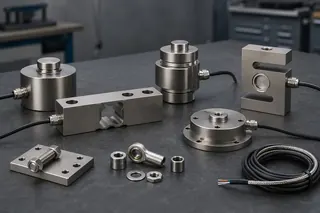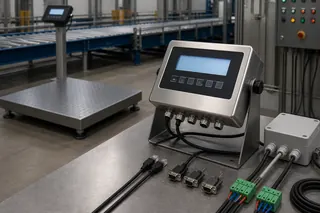
A useful industrial weighing RFQ defines the decision the measurement supports, the equipment and load, the site conditions, the accepted record, and the acceptance method. It also separates supplier, buyer and third-party responsibilities so quotations can be compared without treating missing scope as included.
“Please quote a 10-ton scale” is enough to start an email, but not enough to compare the replies. One bidder may price a bare platform, another may include an indicator and printer, and a third may assume site installation and testing. The totals look comparable even though the proposed jobs are different.
Before requesting prices, write down the decision the measurement supports, the equipment and load involved, the site conditions, the record required at the end of a weighing cycle, and the acceptance test. Those five items give suppliers a common starting point and expose missing scope while it is still inexpensive to resolve.
This checklist is for forklift, loader, portable axle, belt, platform, crane, truck, load-cell and indicator projects. It is deliberately product-neutral. It does not prescribe one accuracy value, legal classification, interface, enclosure rating or calibration method for every scale. Those choices depend on the complete instrument, process and market. Its purpose is to make the unknowns visible, assign responsibility, and turn a quotation into a testable project proposal.
Start with the decision someone must make
Write one sentence describing what a person or system will do with the result. “We need a loader scale” names hardware. “The operator must stop loading before the truck exceeds the internal dispatch target, and the office must receive a completed load record” describes a decision and a record. The second statement lets a supplier ask useful questions about the machine cycle, the indication, the operator prompt, accumulation, data transfer and acceptance.
The same distinction matters elsewhere:
- A warehouse may need to verify pallet weight during movement, or it may need a controlled stationary checkpoint.
- A quarry may need an operator aid for target loading, a production total, or a measurement used in a commercial transaction. Those are not interchangeable purposes.
- A conveyor project may need process trending, inventory reconciliation, control feedback or a legally regulated total.
- A fleet may need internal overload screening, maintenance information, a dispatch record or an enforcement measurement.
Put the intended use at the top of the RFQ and state uses that are explicitly excluded. If a measurement will affect invoicing, regulated reporting, enforcement, safety interlocks or automatic process control, identify that before model selection. Do not assume a supplier will infer the consequence from the equipment name.
The international vocabulary also distinguishes activities that buyers often blend together. The BIPM/JCGM definition of calibration describes establishing a relation between standards and indications, while verification is the provision of objective evidence that specified requirements are fulfilled. Adjustment is another operation. A quotation that says “calibration included” therefore does not, by itself, tell the buyer what was adjusted, what reference was used, what requirement was verified, or what record will be supplied.
Define the physical measurement envelope
Capacity is only one line in the load case. Give the supplier enough information to understand normal operation, credible extremes and off-axis effects.
For every project, record:
- The item being weighed: vehicle, pallet, bucket load, suspended load, vessel, hopper, conveyor material or another object.
- Minimum, normal and maximum operating loads—not merely the largest theoretical load.
- Tare, dead load, attachment weight, platform weight and other permanent forces.
- How the load enters and leaves the receptor, including impact, acceleration, braking, vibration, side force, wind, slope, misalignment or thermal movement.
- Load dimensions, centre-of-gravity range, wheel or support arrangement, and whether the whole object or only part of it is supported at one time.
- Operating frequency, daily cycles, duty pattern, peak periods and expected service life.
- Abnormal but credible events, such as a vehicle braking on a platform, an attachment striking a stop, a crane load swinging, material building up around a load cell, or a conveyor starting while loaded.
Do not convert these facts directly into a load-cell capacity without engineering review. Structural design, load introduction, safety factors, number of supports, mounting freedom and overload protection influence the sensor selection. OIML R 60:2021 provides metrological terminology and requirements for load cells, but an R 60 classification does not establish the performance of an entire installed scale. The mechanical structure, indicator, cabling, software, adjustment and environment remain part of the result.
For mobile machines, add the exact manufacturer, machine model, year or serial range, attachment, carriage or coupler, hydraulic arrangement, working cycle and any modifications. For a truck scale, attach a vehicle list, axle configurations, traffic direction, turning requirements and a site plan. For a belt scale, provide belt width, speed range, conveyor angle, idler arrangement, material, flow profile, loading uniformity, take-up arrangement and nearby disturbances. For a crane scale, provide the rigging interfaces, load-handling procedure and applicable lifting-equipment safety controls; the weighing instrument must not be treated as a substitute for a lifting safety assessment.
Specify the measurement result in operational terms
Avoid the word “accuracy” without conditions. Ask what result is accepted, at what loads, under which procedure, compared with what reference, and for which use. A useful RFQ separates at least five concepts:
- Indication or division: the displayed increment is not automatically the uncertainty or permissible error of the installed system.
- Repeatability: repeated results under stated conditions may reveal process variability but do not alone show agreement with a reference.
- Error against reference: the difference must be linked to a traceable or otherwise agreed reference and a stated test method.
- Operating influence: temperature, vibration, loading position, speed, slope, material flow and operator technique can change the observed result.
- Acceptance limit: the buyer and supplier need a written pass/fail criterion appropriate to the intended use.
If the instrument is non-automatic, OIML R 76-1:2006 is one important international recommendation covering metrological and technical requirements. In the United States, the current NIST Handbook 44 contains different codes for scales, belt-conveyor scale systems and other device types. These documents are not interchangeable purchasing labels. The buyer must identify the applicable device type, jurisdiction and current local adoption, then confirm the complete approval and verification route with the competent authority.
Create an acceptance table in the RFQ with columns for test point, operating condition, reference, number of repetitions, allowable result, evidence to retain and responsible party. If the project team cannot complete those columns, mark them as decisions required before order—not as silent assumptions.
Describe the site and environment as maintainers will experience it
An enclosure label is not a site survey. Supply photographs, layout drawings and a short description of cleaning, weather, dust, washdown, drainage, chemicals, salt, electromagnetic equipment, vibration, sunlight, condensation and pest exposure. State the normal and extreme ambient conditions if known, but do not invent a design range.
For electrical equipment, IEC 60529 classifies degrees of protection provided by enclosures. An IP code addresses defined enclosure tests; it does not automatically establish corrosion resistance, hygienic suitability, chemical compatibility, condensation control or fitness for a particular cleaning regime. Ask for the exact enclosure rating, material, cable entries, connector protection and installation conditions of the offered model.
Include:
- indoor, sheltered outdoor or fully exposed location;
- mounting surface, foundation and drainage condition;
- temperature, humidity and condensation risk;
- dust type, water jets, immersion possibility and cleaning chemicals;
- vibration, shock and nearby variable-frequency drives, motors, welders or radio equipment;
- hazardous-area classification, only when established by a competent site assessment;
- power source, voltage, frequency, protective devices, grounding and backup requirements;
- cable routes, maximum proposed lengths, junction points and physical protection;
- operator access, display visibility, gloves, language and lighting;
- maintenance access and safe isolation points.
Ask the supplier to identify which facts are within the product specification, which require an option or enclosure, and which remain a site responsibility.
Write the operator workflow before selecting the indicator
List the sequence from the arrival of the load to the release of the record. Who zeroes the scale? When is tare acquired? What indicates stability? Can the operator accept or reject a reading? What happens after overload, motion, a broken sensor, a printer fault or a lost network? Who may change configuration? How is an accidental duplicate transaction corrected without deleting the audit trail?
For each step, state:
| Workflow element | RFQ question |
|---|---|
| Identification | Which vehicle, material, pallet, operator, order or batch ID is required? |
| Measurement state | What makes a result valid, stable, complete or invalid? |
| Operator action | Which prompts, keys, languages and permissions are needed? |
| Control action | Is the result informational, or does it drive an output, alarm, gate, feeder or PLC? |
| Record | Which fields, units, timestamps and status flags must be saved? |
| Exception | What happens after overload, motion, sensor failure, power loss or communication loss? |
| Correction | How is a mistake reversed, approved and audited? |
Do not choose an indicator merely because its brochure lists RS-485, Ethernet or Modbus. The physical port is only one layer. The supplier must confirm electrical interface, protocol role, data model, register or message mapping, byte and word order, scaling, units, update behaviour, invalid states and write permissions.
The Modbus Application Protocol V1.1b3 defines function codes and an application-layer data model, while the Modbus Organization publishes a separate serial-line implementation guide. Neither document defines a weighing manufacturer’s register map or business transaction. Request that map for the exact firmware version and attach a sample accepted record to the RFQ.
Treat data as a contract, not an accessory
Identify the system that owns each record. A display value polled by a PLC is not the same thing as a completed weigh transaction acknowledged by an ERP. Define whether the project needs a live process value, a stable accepted value, totals, diagnostic status, configuration data or a business record.
For every required field, document:
- business name and technical name;
- data type, units, decimal treatment and valid range;
- source and destination;
- update or transaction trigger;
- validity, motion, overload and fault states;
- timestamp source and time-zone policy;
- unique transaction or device identifier;
- acknowledgement, retry and duplicate handling;
- offline queue and recovery behaviour;
- retention, export and audit requirements;
- user and system permissions.
Where the weighing system connects to operational technology, include the organization’s cybersecurity owner. NIST SP 800-82 Rev. 3 emphasizes that operational technology security must account for performance, reliability and safety. The RFQ should therefore identify network zones, remote-access policy, credential ownership, approved protocols, patch and backup responsibilities, logging, recovery and the test environment. Do not enable remote access merely to simplify commissioning.
Request evidence, not adjectives
Replace “industrial quality,” “high accuracy” and “waterproof” with deliverables that can be reviewed. Depending on the project, request:
- exact model and option codes for every supplied component;
- controlled data sheets and drawings with revision identifiers;
- load-cell, indicator and complete-instrument certificate documents where relevant;
- certificate number, issuing body, model scope, software or module scope and validity status;
- installation, wiring, grounding and calibration instructions;
- protocol manual and register map for the quoted firmware;
- material or enclosure declaration where required;
- factory test plan and report format;
- site acceptance test plan and raw-record template;
- calibration or reference-standard evidence with traceability information;
- configuration backup and restoration procedure;
- operator and maintenance manuals;
- spare-parts list and version-compatibility statement;
- training, warranty, support and return process as contractual terms.
ISO 10012:2026 addresses measurement management systems intended to support confidence in the validity and reliability of measurement results. Buyers do not need to claim compliance with that standard to apply the underlying discipline: define the measurement process, its fitness for intended use, the equipment controls, responsibilities and records. Likewise, a certificate attached to one component must not be represented as approval of the assembled system unless its scope supports that conclusion.
Allocate work at every interface
Many weighing disputes are responsibility disputes disguised as equipment faults. Add a responsibility matrix to the RFQ. At minimum, assign:
- site survey and final dimensions;
- civil design, foundation, drainage and traffic control;
- machine preparation, welding, drilling or hydraulic work;
- mechanical installation and alignment;
- cabling, power, grounding and network connection;
- reference loads, test vehicles or material test quantities;
- configuration, adjustment, calibration and legal verification;
- PLC, database, ERP or WMS development;
- cybersecurity approval and remote access;
- operator and maintenance training;
- acceptance authority and sign-off;
- backups, spare parts, recurring checks and service response.
For each interface, name who designs, supplies, installs, inspects and approves it. “By customer” is too vague when several contractors are involved. If a local authority or accredited laboratory must participate, identify who schedules it and what prerequisites they need.
Compare bids with a compliance matrix
Do not compare only the total price line. Copy every mandatory requirement into a matrix and require each bidder to answer one of four states: compliant as quoted, compliant with listed option, deviation proposed, or not offered. Ask for a document reference beside every answer.
Separate the commercial comparison into equipment, options, engineering, documentation, factory tests, installation, travel, civil work, calibration, legal verification, software, licenses, integration, training, spares, freight and taxes. A low equipment price can transfer substantial work to the buyer. A higher price can also contain unnecessary functions. The matrix makes both visible.
Check proposed exceptions before award:
- Is a performance value stated under the same conditions as the RFQ acceptance test?
- Does the offered certificate cover the exact model, complete system, software and intended market?
- Are all cables, mounts, junction boxes, ramps, printers, licenses and accessories included?
- Does “integration included” identify systems, fields, interfaces and acceptance cases?
- Are recurring fees, subscriptions or calibration services explicit?
- Is the delivery schedule tied to approved drawings and buyer inputs?
- Are warranty start, exclusions, remote support, return freight and local labour clear?
Freeze the acceptance plan before the purchase order
Acceptance should prove the intended workflow, not merely that the display turns on. Build the plan around requirements already stated in the RFQ:
- Confirm delivered models, options, serials, revisions and documents.
- Inspect installation, load path, alignment, foundation, cables, sealing and environment.
- Record configuration and create a recoverable backup.
- Confirm zero, tare, indication, units, operator permissions and required functions.
- Execute the agreed reference tests over the specified operating conditions.
- Test loading position, direction, repeat operation or material flow where relevant.
- Trigger overload, motion, communication loss, power interruption and sensor faults safely.
- Verify outputs, printed tickets and data records field by field.
- Demonstrate offline operation, restart, retry and duplicate protection.
- Train operators and maintainers using the final configuration.
- Record deviations, corrective actions, retests and approval signatures.
- Complete jurisdictional verification or sealing where required.
Do not leave the reference method and pass criteria for the commissioning day. If access, test weights, vehicles, material, safe isolation or authority attendance are not arranged, the team may be unable to perform the promised test.
The minimum pack to send with an RFQ
A disciplined request can still be concise. Assemble these eight items:
- A one-page process and decision statement.
- Equipment, load and duty data.
- Site photographs and layout or machine drawings.
- Intended result and acceptance table.
- Operator workflow and exception states.
- I/O, data-field and integration schedule.
- Deliverable and responsibility matrix.
- Commercial comparison schedule and target timeline.
Mark unknown information as “supplier to advise” or “decision required,” not as an assumed value. Invite bidders to list contradictions and missing inputs before quoting. Open questions are useful when they are visible, assigned and closed before order; hidden assumptions are what make late changes expensive.
Next step: turn the checklist into a configuration review
Choose the relevant industrial weighing product family, then attach the completed requirement pack to the request-a-quote form. For data-connected projects, include the interface schedule described in the weighing data integration solution. Ask for a proposed configuration, a list of required options and buyer inputs, documented deviations, and items that remain subject to model-level, site or jurisdictional confirmation—not a blanket promise based on a few headline specifications. FMSCales availability and service scope are confirmed only in the written proposal.
Frequently asked questions
What Belongs in an Industrial Weighing System RFQ?
A useful industrial weighing RFQ defines the decision the measurement supports, the equipment and load, the site conditions, the accepted record, and the acceptance method. It also separates supplier, buyer and third-party responsibilities so quotations can be compared without treating missing scope as included.
References
The following official and first-party sources support the bounded examples, standards context and evaluation methods used in this guide. They do not verify an FMSCales configuration.
- ISO 10012:2026 — Requirements for measurement management systems
- OIML R 76-1:2006 — Non-automatic weighing instruments
- OIML R 60:2021 — Metrological regulation for load cells
- NIST Handbook 44 — Current Edition
- IEC 60529 — Degrees of protection provided by enclosures
- Modbus Application Protocol Specification V1.1b3
- NIST SP 800-82 Rev. 3 — Guide to Operational Technology Security
- BIPM/JCGM VIM 2.39 — Calibration
- BIPM/JCGM VIM 2.44 — Verification
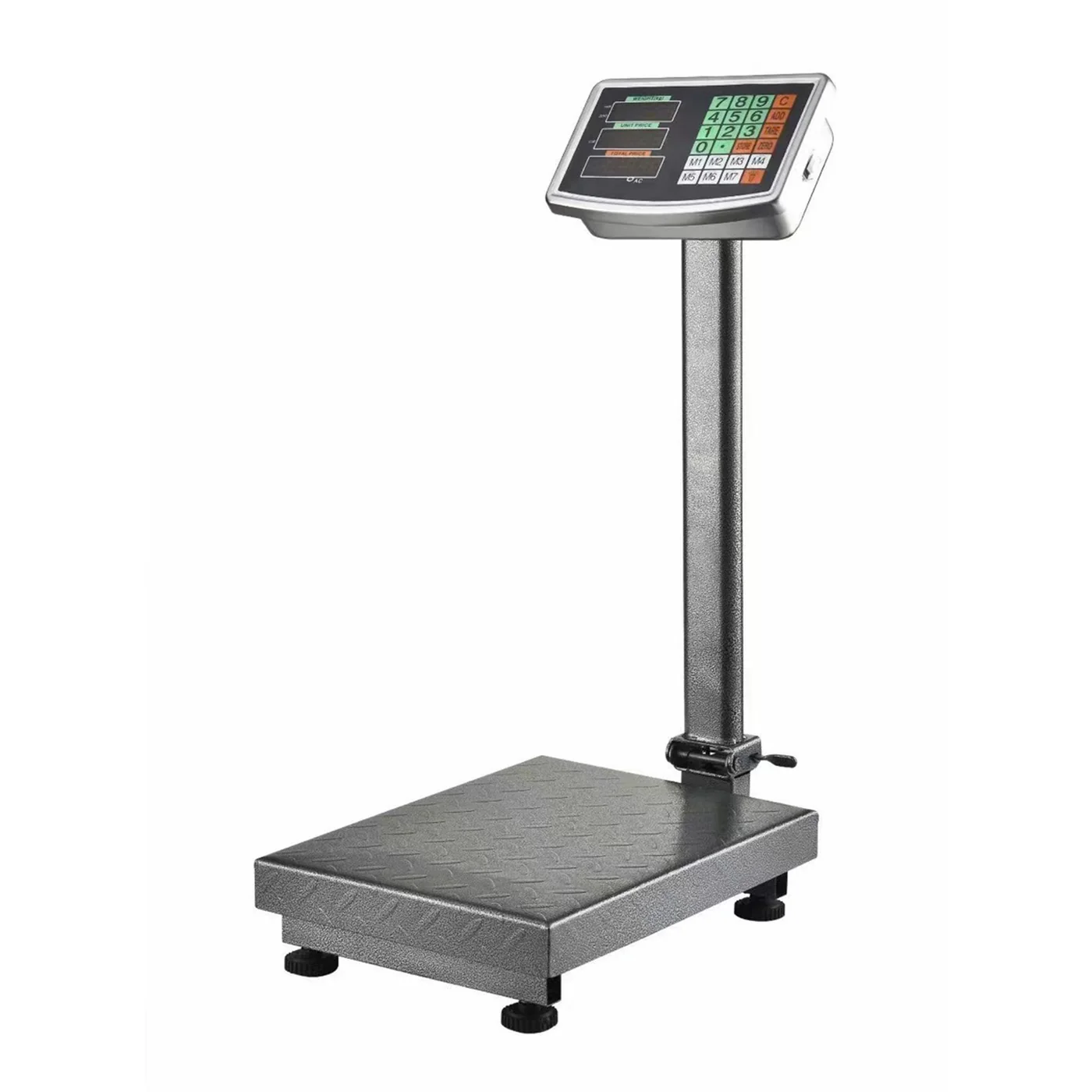 Platform Scales