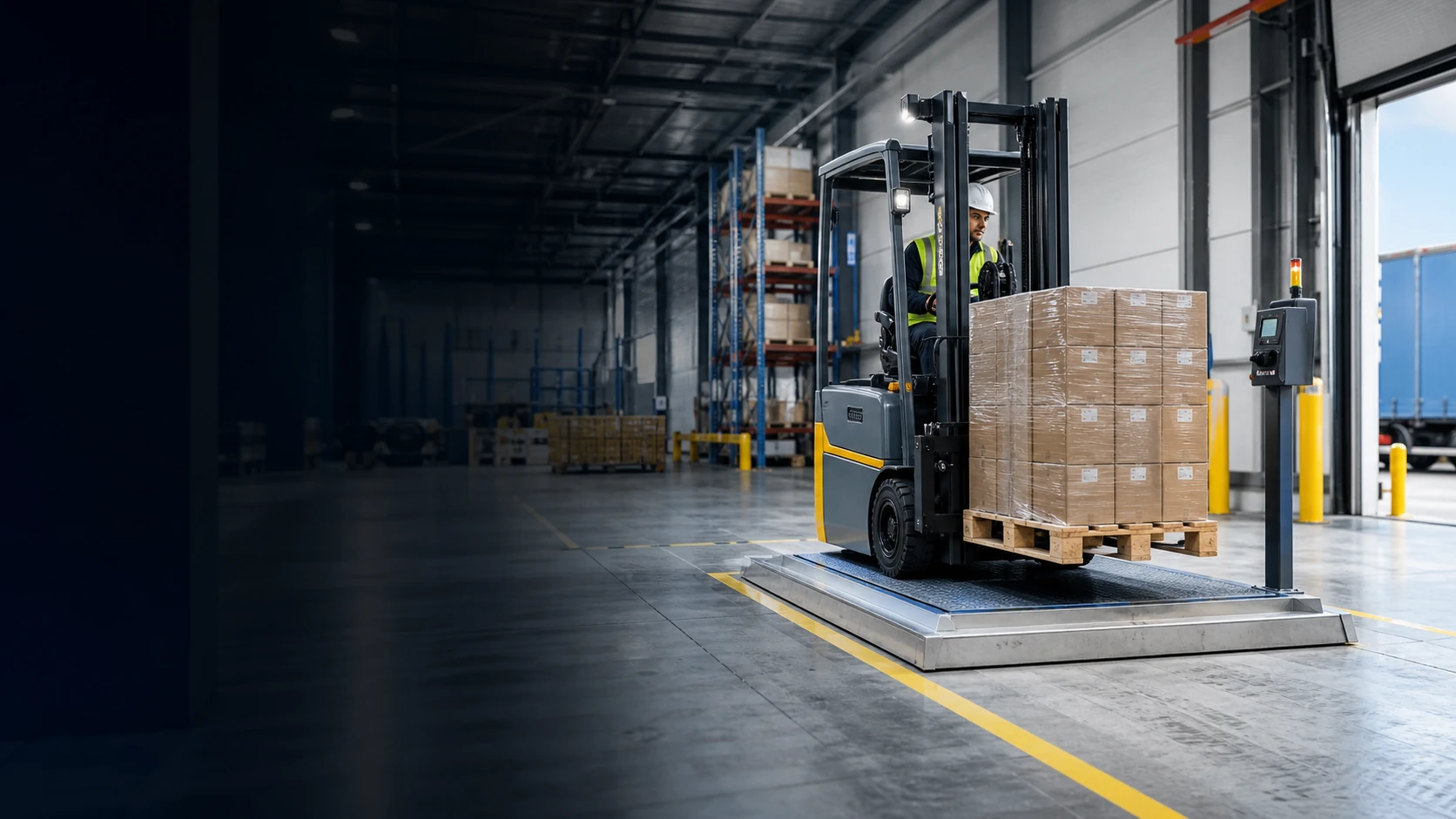
Choose a forklift scale when the weight decision must happen during pallet movement and the exact truck can accept the weighing route. Choose a floor scale when pallets can move through a fixed checkpoint without creating an unacceptable queue. Neither route is inherently more accurate: compare the installed configuration, operating procedure and acceptance test.
1. Put the weight decision on the process map
Mark where the pallet is received, stored, picked, checked and dispatched. Then identify who acts on the weight and whether moving the pallet to a stationary scale creates another handling step.
| Decision area | Forklift scale | Floor scale |
|---|---|---|
| Weighing point | During a defined lift or handling cycle | At a fixed stationary checkpoint |
| Typical workflow value | Avoids a separate trip when weighing belongs in the move | Creates a supervised, repeatable weighing station |
| Primary compatibility question | Truck, carriage, forks, attachment and load centre | Platform size, loading access, ramps and floor condition |
| Traffic effect | Distributed across equipped trucks | Vehicles and pallets may queue at one station |
| Service focus | Truck-mounted sensors, cables and operator lift procedure | Platform freedom, corners, ramps and indicator location |
2. Review forklift capacity and attachments before retrofit
A carriage-mounted system, weighing forks or another front-end change can affect the truck configuration. Record the data plate, load centre, carriage, attachments and residual capacity before proposing hardware. Where a change can affect capacity or safe operation, obtain the approval and updated markings required for the truck and jurisdiction before use.
3. Review the fixed weighing point as a complete station
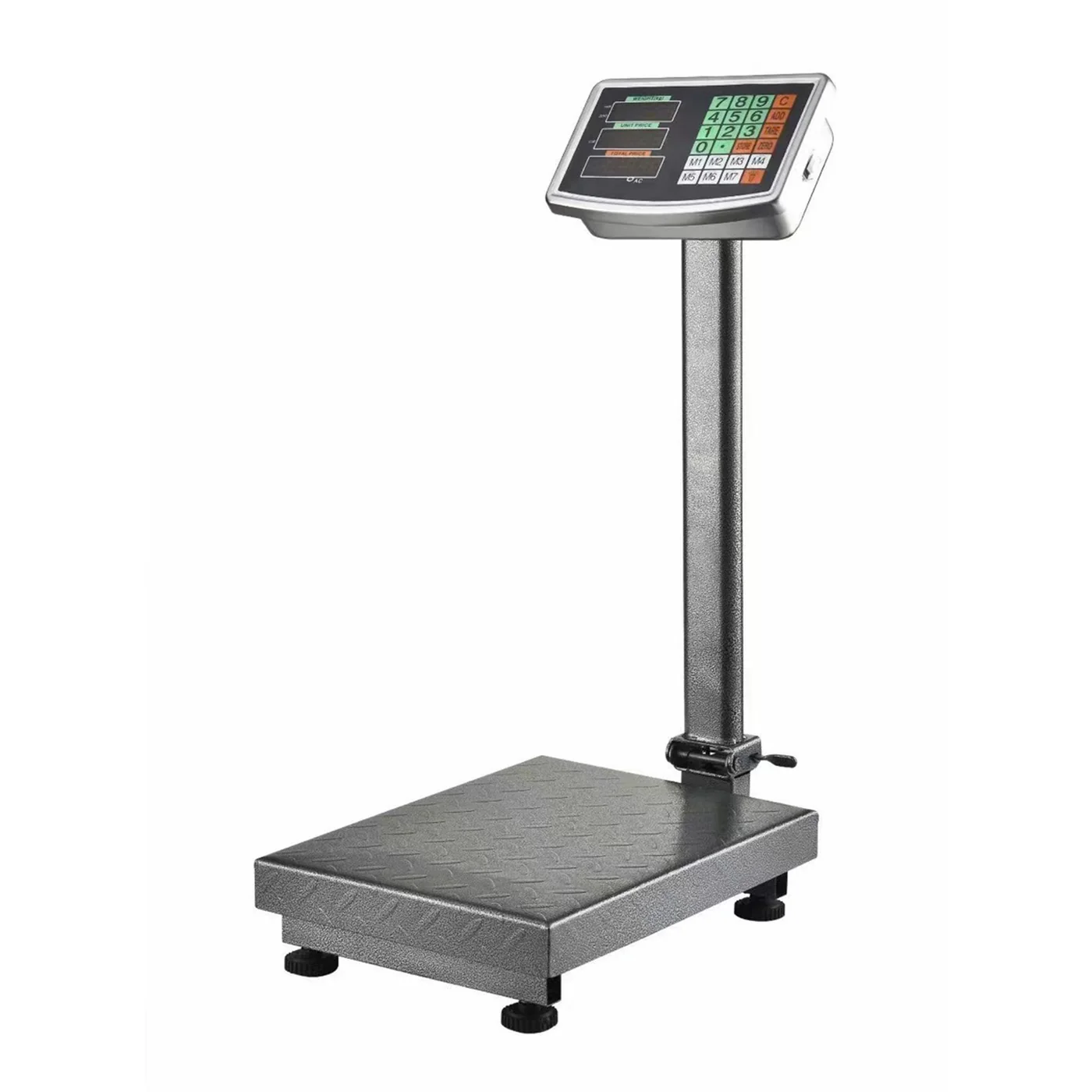
A floor scale needs a platform large enough for the load, safe access for the pallet-handling equipment, a level support, clearance from binding and a protected indicator location. Include ramps, pits, washdown or cleaning needs and the queue created by the station.
4. Compare records and operator controls
Define stable-weight logic, pallet or job ID, tare method, unit, exception handling and who accepts the result. An onboard system may need truck-by-truck user control; a floor station may need traffic control and a shared identification step.
- Sample accepted weight record
- Operator instruction and invalid-reading rule
- Printer, WMS or ERP field ownership
- Offline and duplicate-record behaviour
- Calibration-check and service responsibility
5. Use the same acceptance logic for both routes
Test representative pallets across the intended load range with a suitable reference. Repeat the defined operating procedure, record environmental and installation conditions and agree what result is acceptable before routine use.
6. Weigh the decision points side by side
Neither route is universally better. The comparison below reflects what buyers typically weigh when both options are technically possible for the same pallet flow.
| Decision point | Onboard forklift scale | Fixed floor scale |
|---|---|---|
| When weighing happens | During the handling move itself | As a separate step at a weighing station |
| Extra handling required | None beyond the normal pallet move | One detour to the platform and back |
| Throughput driver | Truck speed and operator routine | Station capacity and queue discipline |
| Space and installation | No floor space; truck-side fitting and calibration | Platform footprint, level support, access and queue space |
| Data capture | In-cab display, optional printer or data output per truck | Shared indicator, printer or system link at the station |
| Typical best fit | High-frequency pallet moves where time per move matters | Centralized verification, shared loads and mixed traffic |
7. Match the route to the workflow scenario
Start from the workflow, not the hardware. These scenarios show how buyers usually map the two routes once the decision points are on the table.
| Scenario | Usually better route | Why |
|---|---|---|
| Cross-dock or dispatch with many pallets per hour | Onboard forklift scale | Removes the station queue from every move |
| Shipping verification on selected pallets | Fixed floor scale | One shared station handles spot checks from any truck |
| Inventory counts across a large warehouse | Onboard forklift scale | Weighing travels with the counting truck |
| Mixed pallet sizes and walkie or manual handling | Fixed floor scale | Platform accepts loads no single truck configuration covers |
| Readings used in a commercial transaction | Either, with the approved configuration | The complete installed system needs the applicable approval and local verification |
8. Run a one-week pilot before you commit
A short pilot answers the comparison with your own pallets, trucks and operators instead of a datasheet. Run both routes on the same representative work and record every cycle.
| Step | Action | Pass criterion |
|---|---|---|
| 1. Baseline | Time the current pallet flow and count weighing-related detours for one shift | Written baseline with timestamps |
| 2. Onboard trial | Fit or simulate the onboard route on one truck for two days of normal work | Weight captured without added moves |
| 3. Station trial | Route the same work through the floor station for two days | Queue time and station availability recorded |
| 4. Accuracy check | Compare both routes against a reference load across the intended range | Both inside the agreed band for the intended use |
| 5. Decision record | File times, errors, operator feedback and the chosen route with reasons | Signed comparison attached to the purchase file |
Decision guidance
Use an onboard route when eliminating a separate handling step creates real operational value and compatibility can be approved. Use a floor scale when a controlled stationary weighing point is simpler to maintain, verify and supervise.
The comparison does not establish legal-for-trade status, forklift approval or installed accuracy. Confirm the complete instrument, truck modification or attachment, local rules and site acceptance procedure.
Compare the weighing checkpoint, not only the device
A floor scale vs forklift scale decision starts with where the operator needs the weight and what extra movement each option creates. Then compare truck compatibility, platform access, traffic, operator control, maintenance and the installed acceptance method.
- Map the pallet path and the decision made from the weight
- Review truck residual capacity and attachments for an onboard route
- Review platform access, ramps, clearance and queueing for a fixed route
- Use equivalent representative-load tests to compare the installed workflows
Buyer-task questions
Is an onboard route always faster?
Not automatically. It can remove a separate trip, but lift procedure, stability checks, operator input and exception handling still affect cycle time.
Is a floor scale always easier to verify?
A fixed station can simplify control, but platform freedom, approaches, loading position, indicator setup and the reference procedure still need inspection.
References
The following official and first-party sources support the bounded examples, standards context and evaluation methods used in this guide. They do not verify an FMSCales configuration.
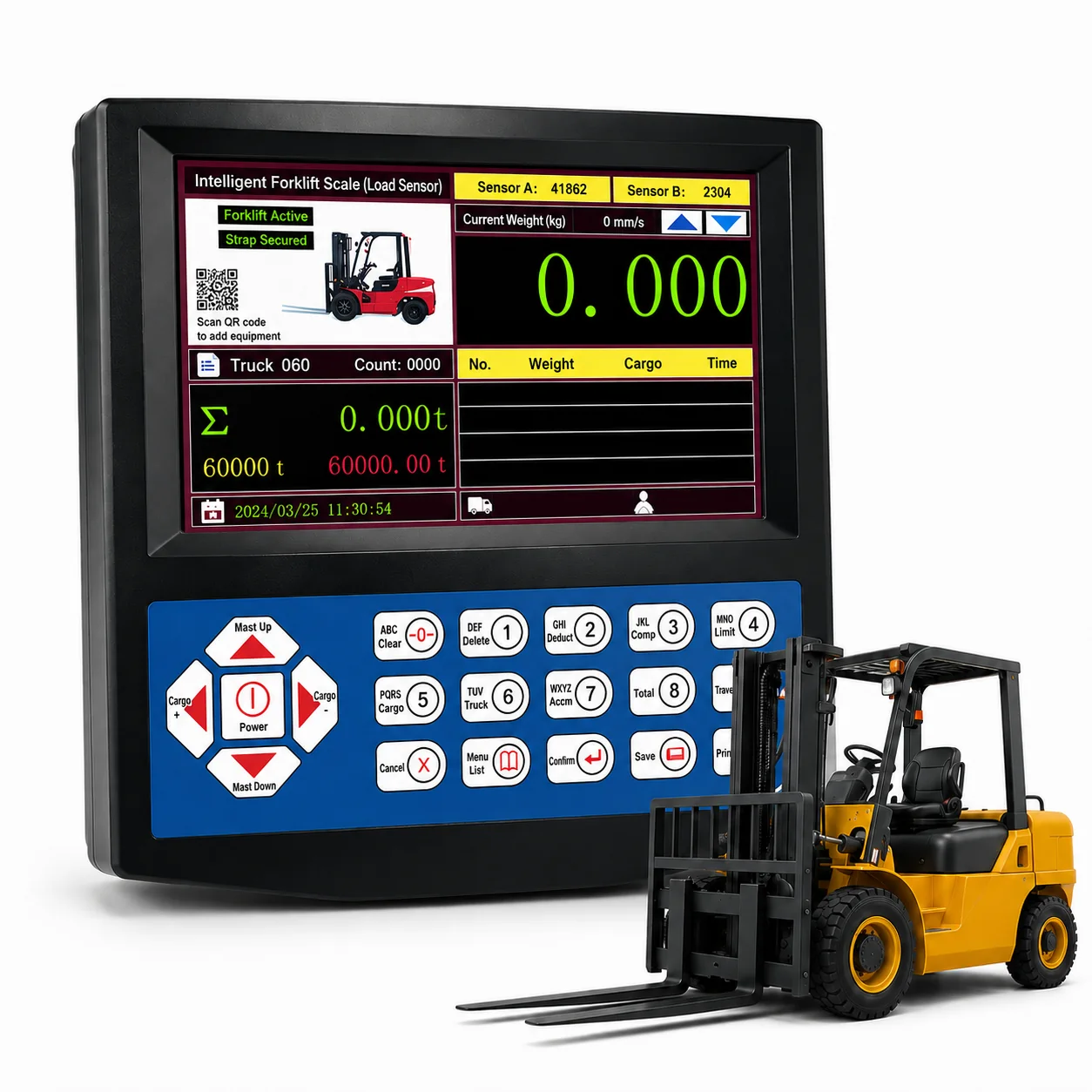 Forklift Scales
 Platform Scales
 Weighing Indicators
 Load Cells